
Last updated September 22, 2026
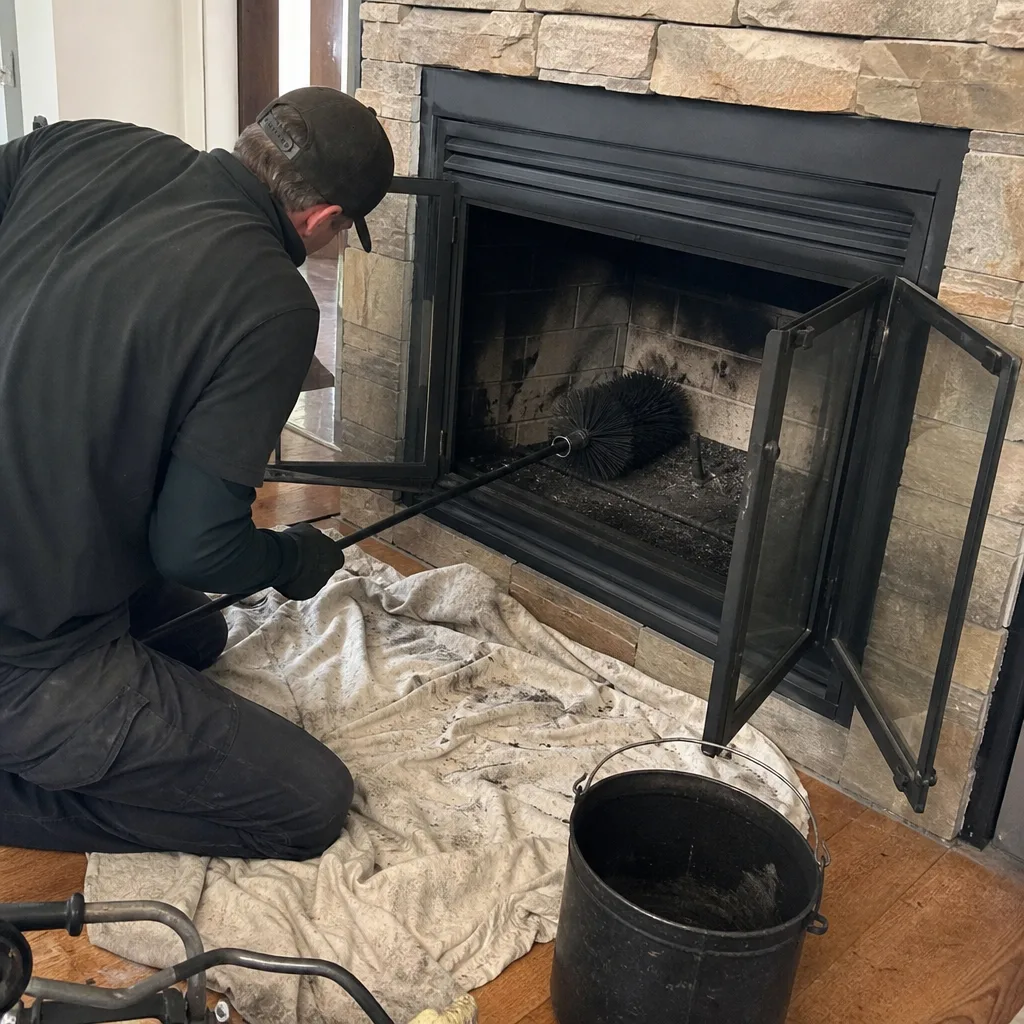
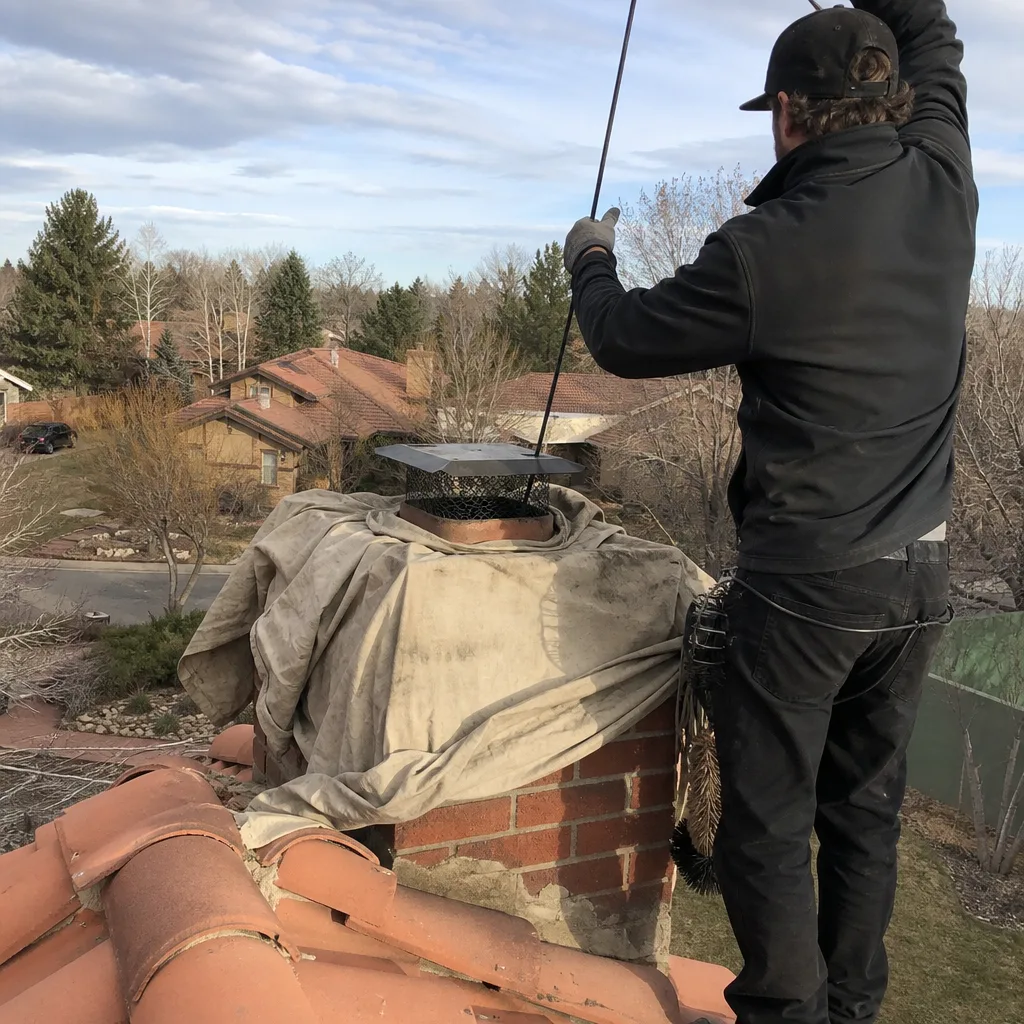
Level 1 sweep and inspection to the NFPA 211 annual standard - flue, crown, cap, and flashing checked and photographed
Chimney sweep logs do not sweep chimneys. They loosen some creosote - which then falls where a brush and vacuum still have to collect it.
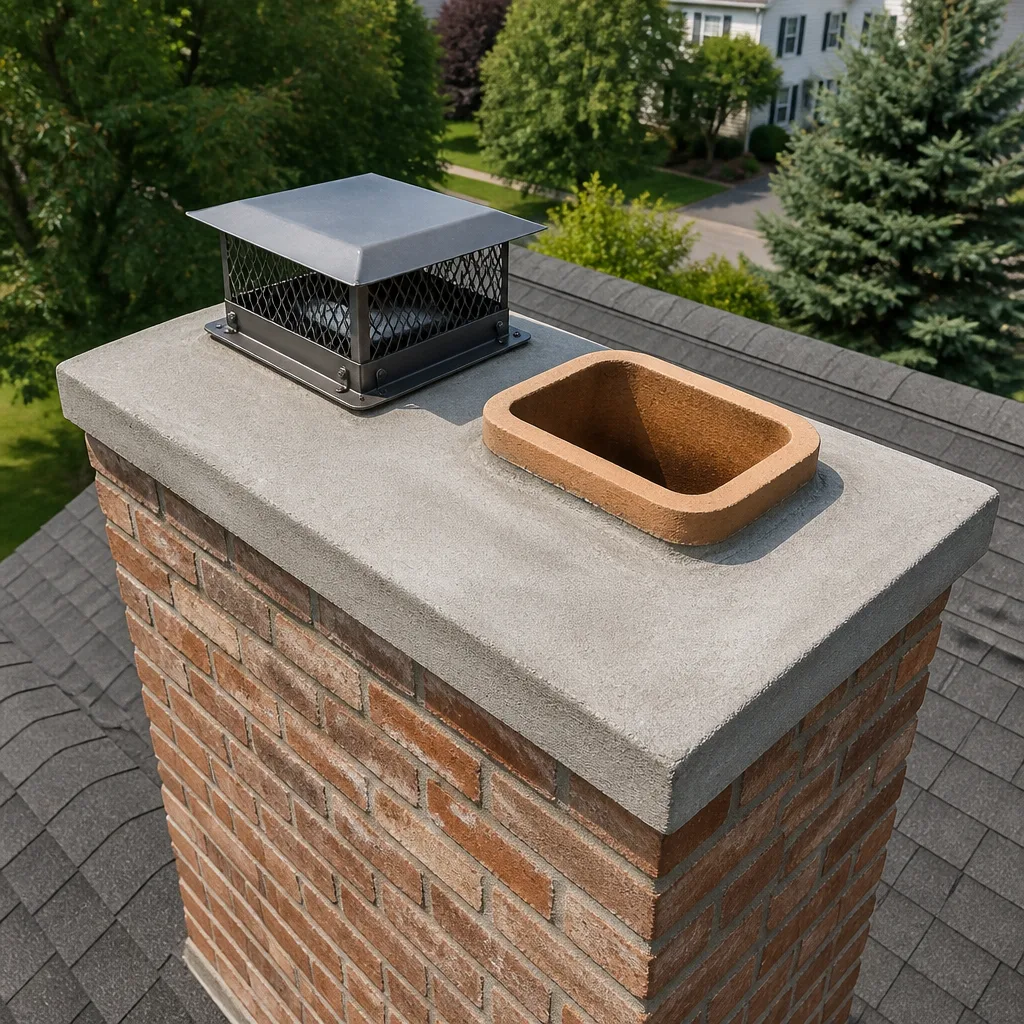
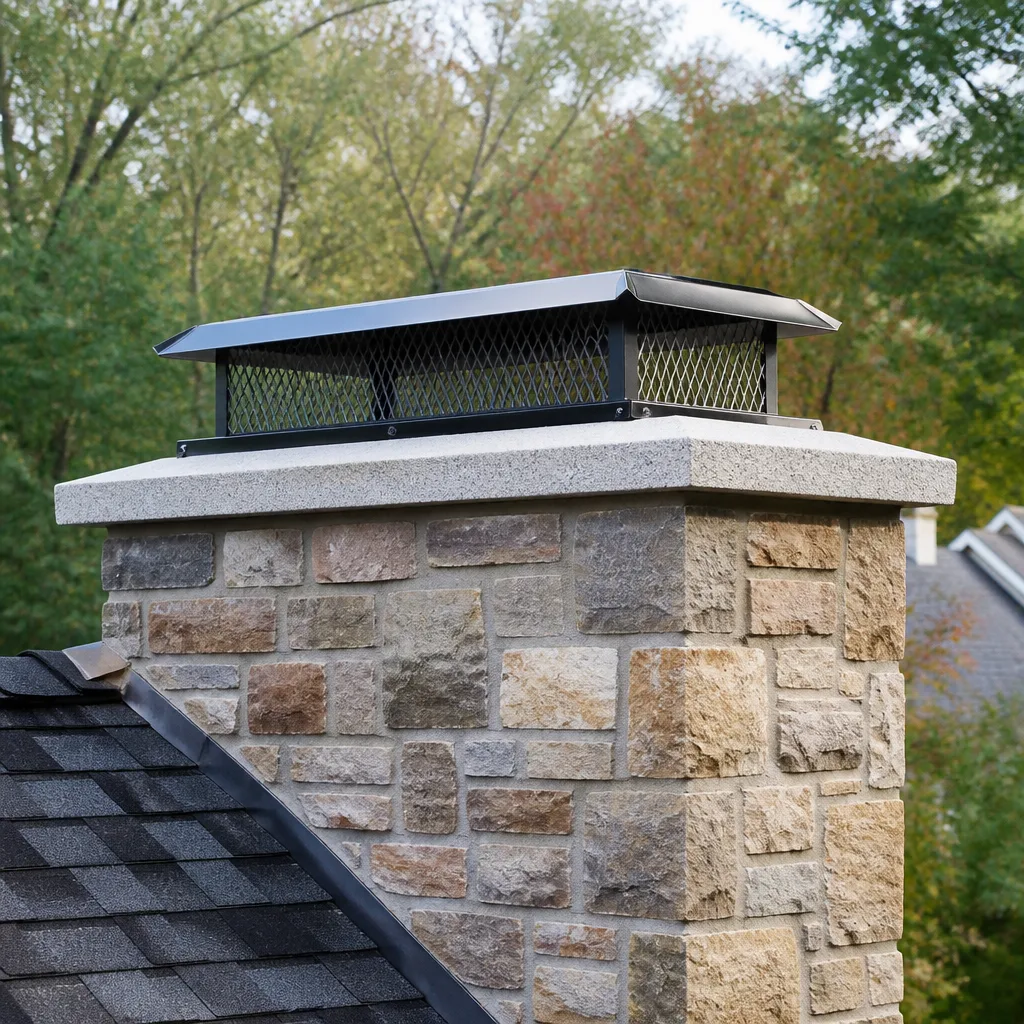
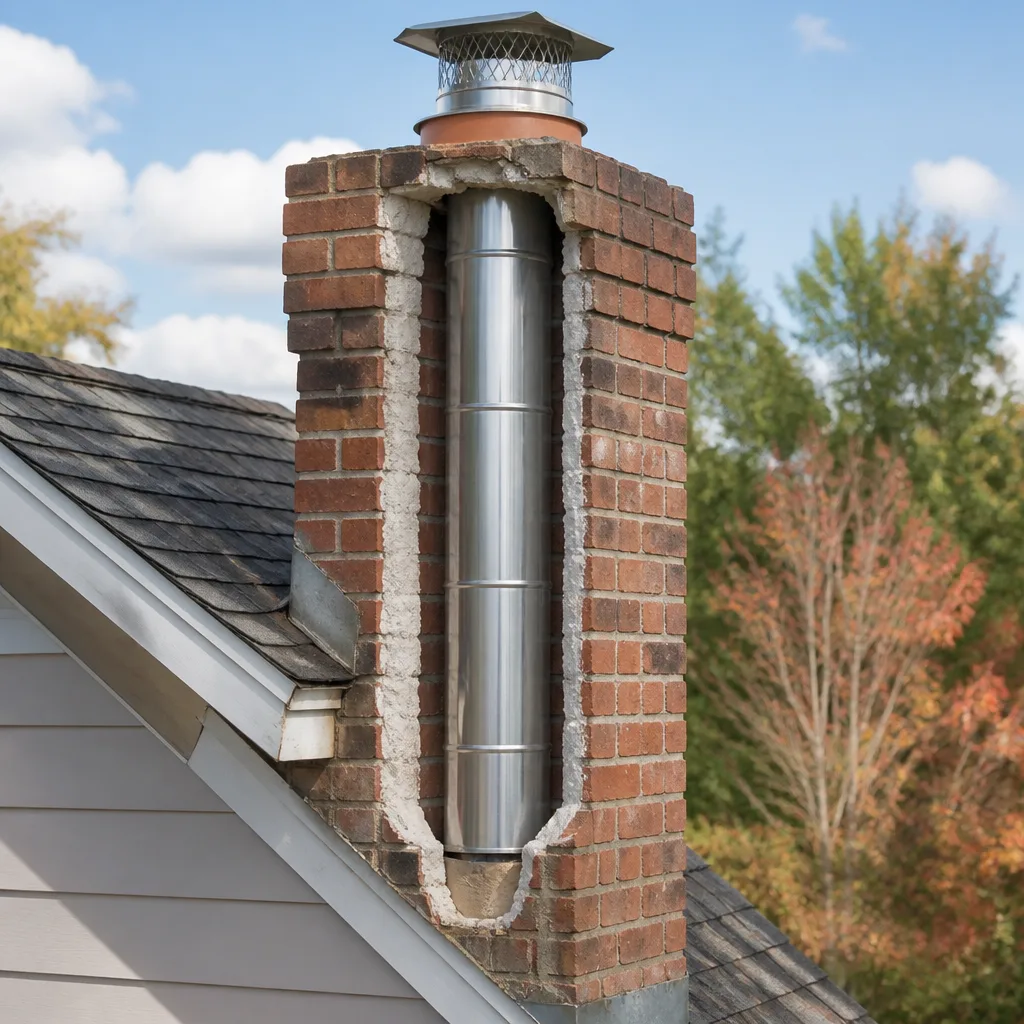
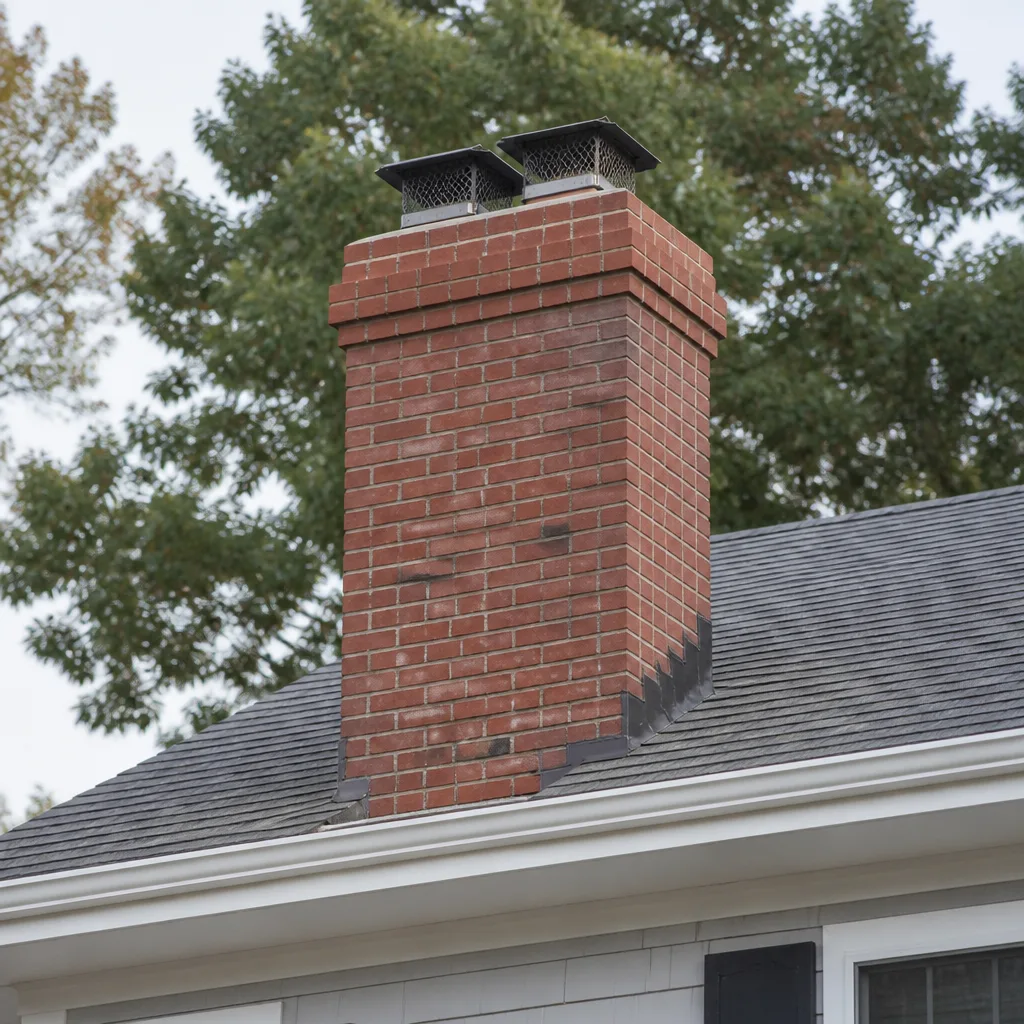
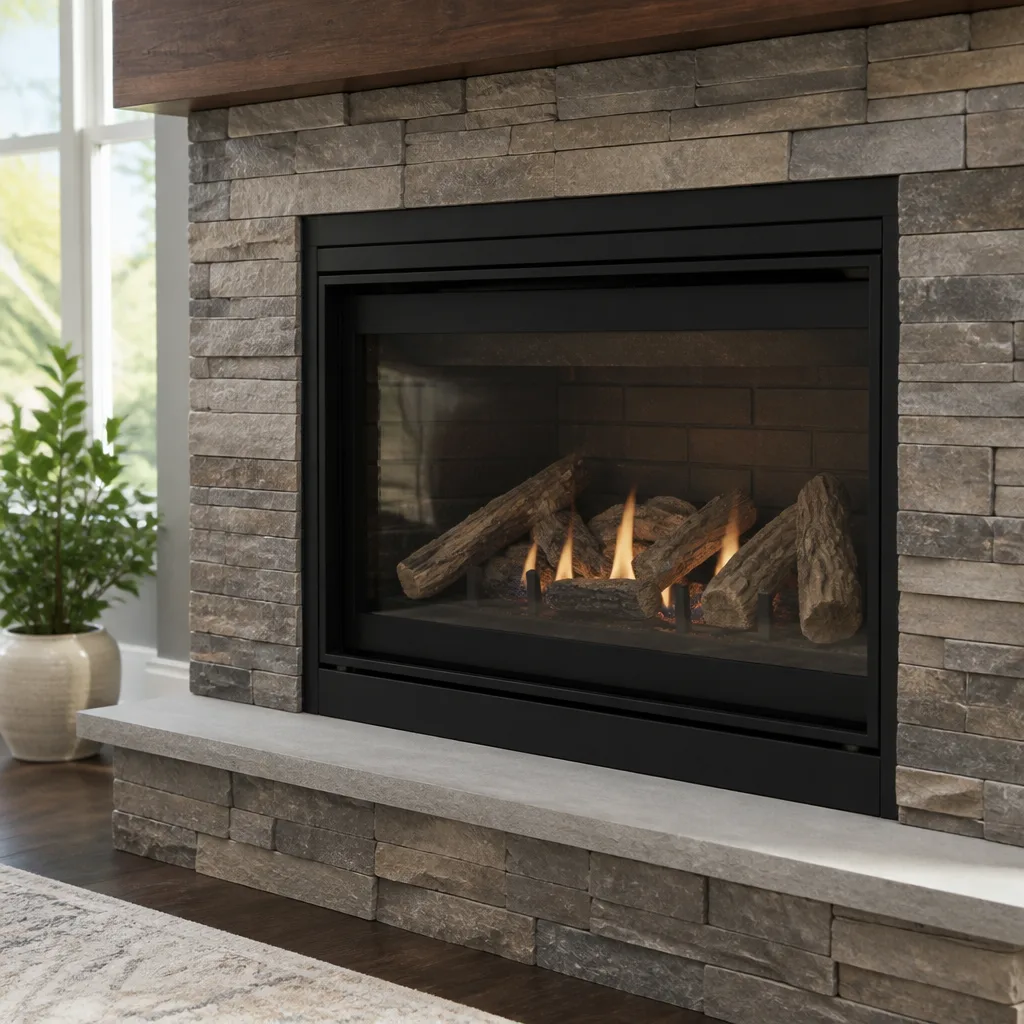
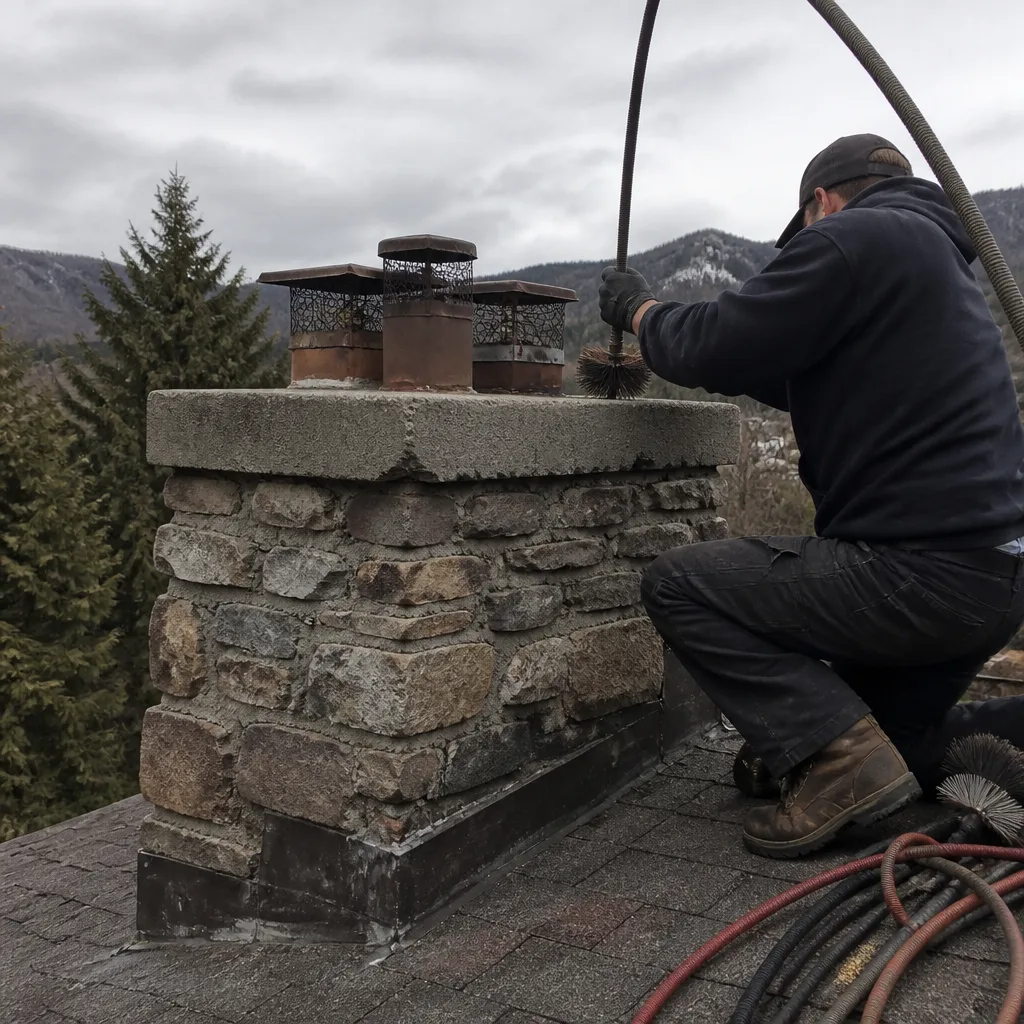 Before
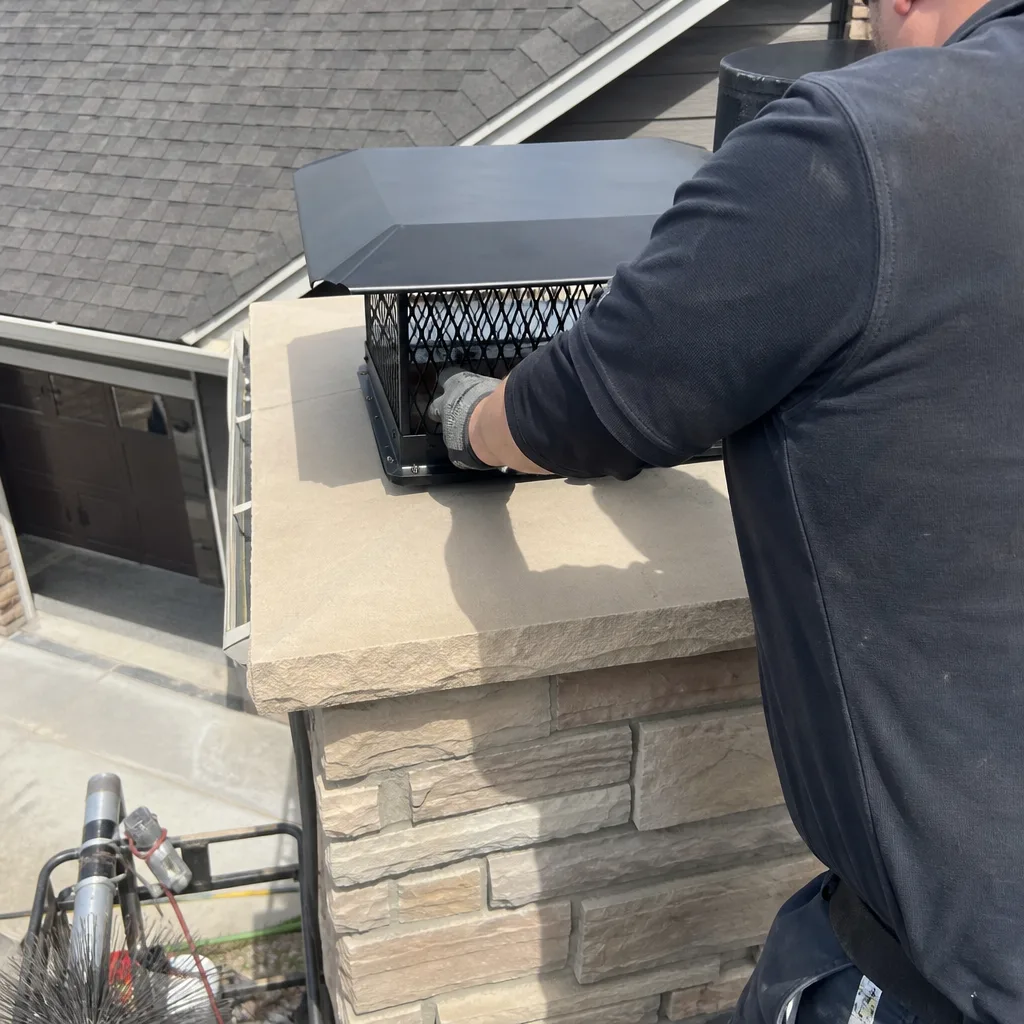 After
After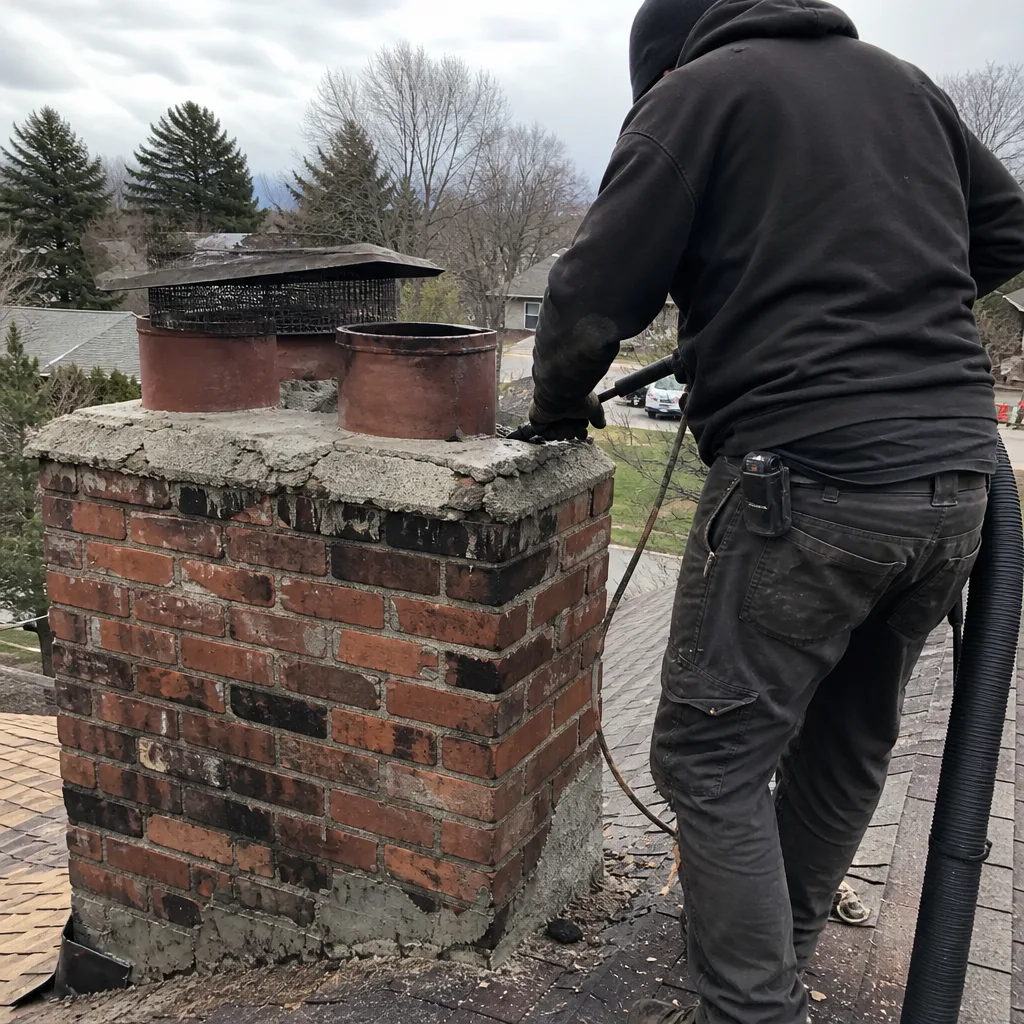 Before
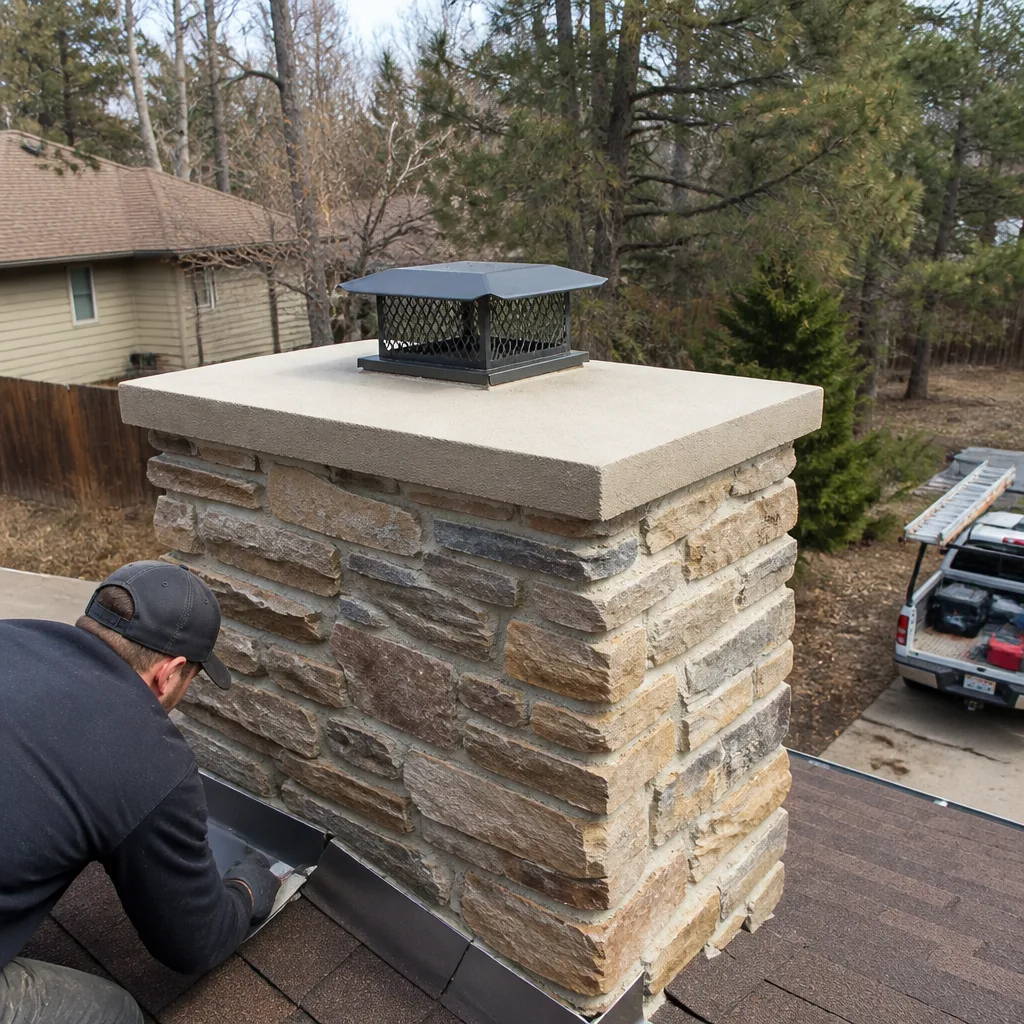 After
After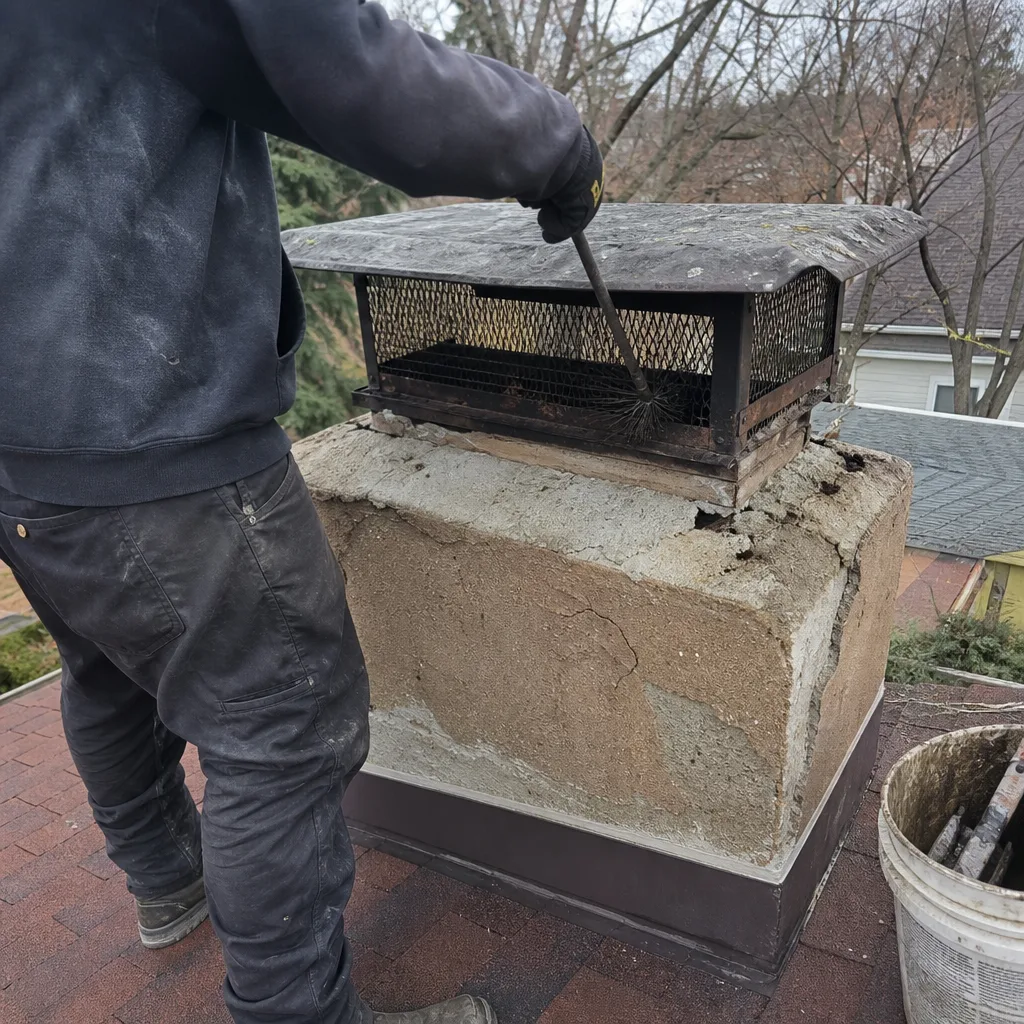 Before
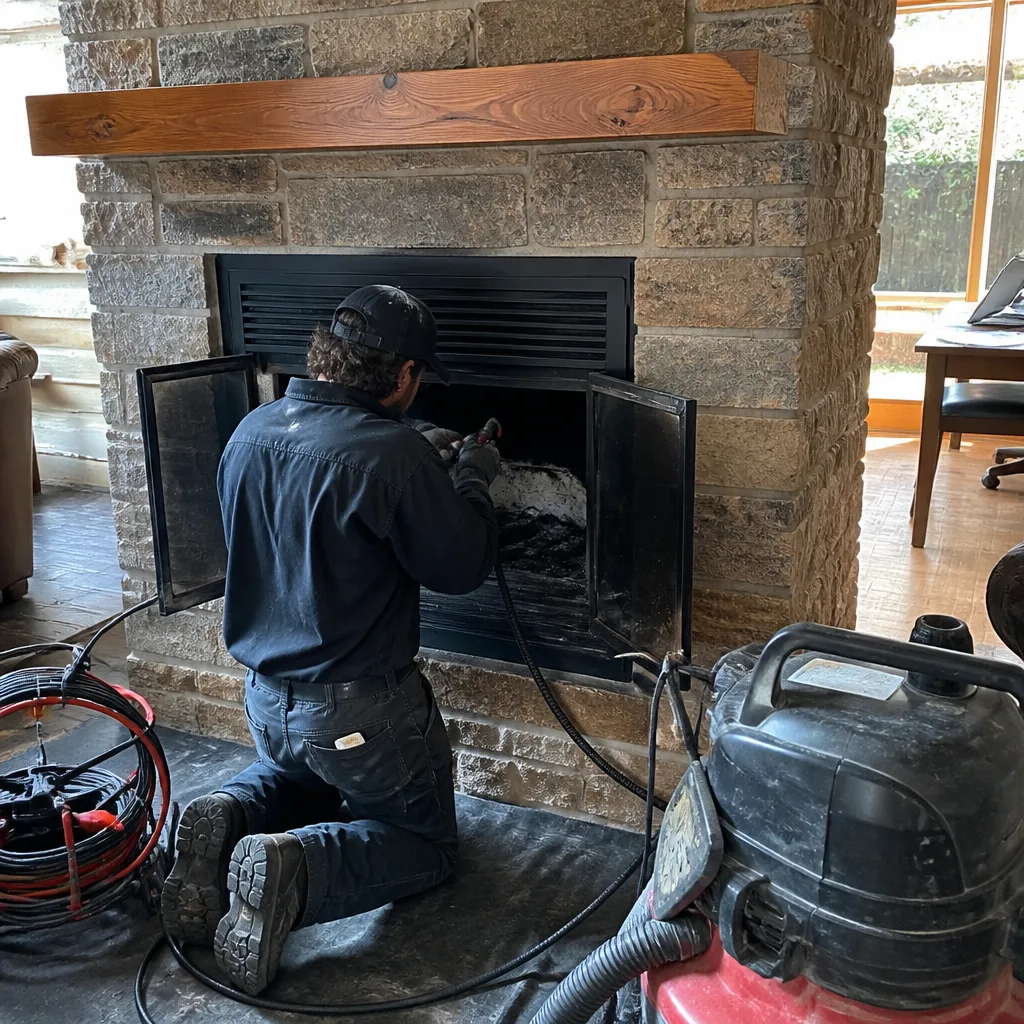 After
AfterHow to Hire a Chimney Cleaning Contractor in Boulder: A Step-by-Step Guide
Three companies in Boulder advertise “chimney inspection included” and mean a technician with a flashlight stood at the firebox opening. One means a camera went down the flue and you received a written report. The price difference at booking is often $0. We’ve completed more than 38,000 chimney inspections and cleanings since 2009, and the hiring mistake Boulder homeowners make most often isn’t hiring unlicensed - it’s hiring on price alone from a company that doesn’t disclose what “inspection” means before the appointment. This guide gives you the five questions that separate camera-based documentation from a flashlight look billed as an inspection.
Quick Answer
To hire a chimney cleaning contractor in Boulder, verify Colorado contractor registration, ask specifically whether the inspection includes a camera scan of the flue interior, demand a written quote with line-item pricing before booking, confirm the warranty terms in writing, and check that the technician is background-checked and uniformed. The best contractors in Boulder’s market document every visit with photos and provide a written scope, price, and warranty before any work begins - not after the tech is already in your home.
Table of Contents
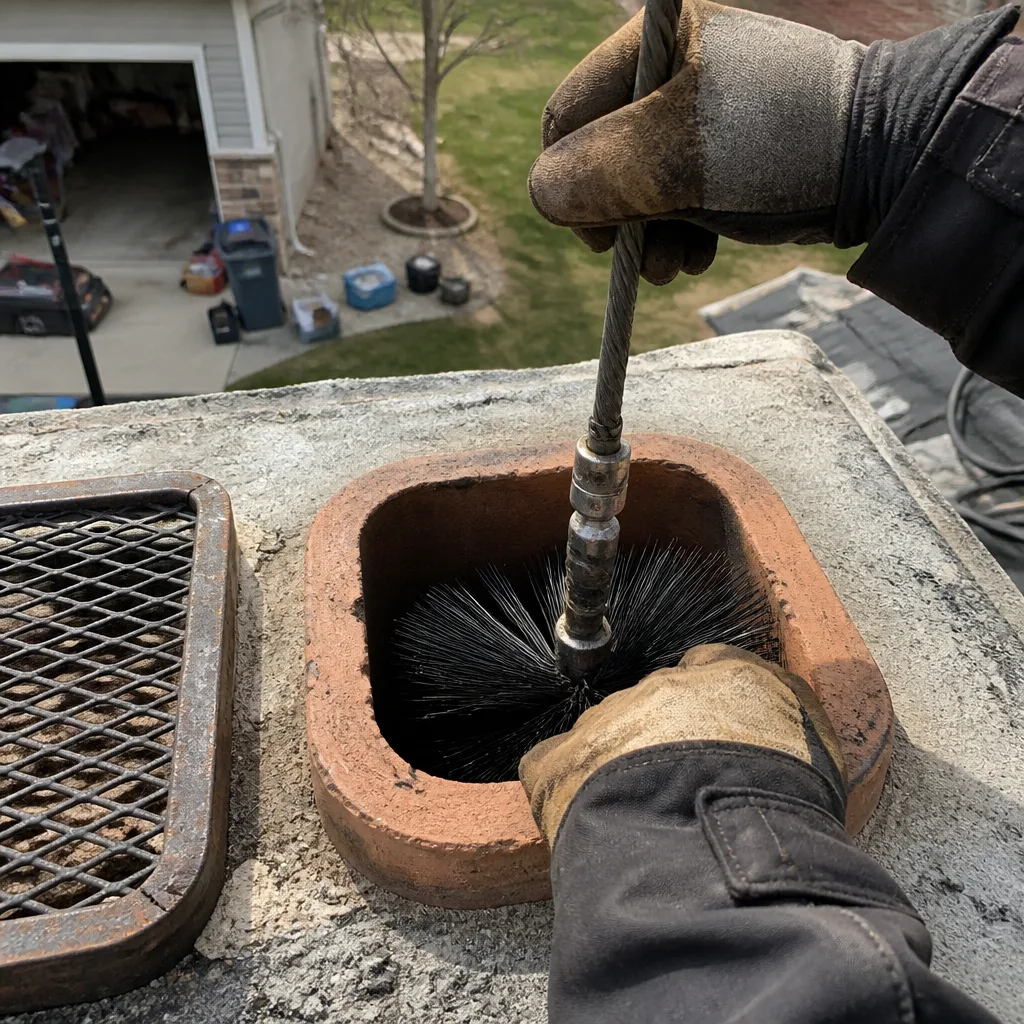
- The Five Pre-Hire Questions That Reveal Everything
- What CSIA Certification Covers (and What It Doesn’t)
- How to Get and Compare Written Quotes in Boulder
- Colorado Contractor Registration: What the Law Requires
- What a Chimney Warranty Should Actually Say
- Boulder-Specific Factors: Climate, Codes, and Neighborhoods
- Common Mistakes to Avoid
- When to Call a Professional
- Frequently Asked Questions
- The Bottom Line
BeforeAfterThe Five Pre-Hire Questions That Reveal Everything
Most Boulder homeowners ask two things: “How much?” and “When can you come?” Those questions won’t protect you from a sweep who charges $89, shines a flashlight up the flue, and recommends $3,200 in “urgent” liner work you can’t verify.
Here are the five questions that separate actual documentation from marketing language, and what the answers should sound like.
Question 1: “Does your inspection include a camera scan of the flue interior?”
The answer you’re looking for is immediate and specific: “Yes, we run a camera from the firebox to the top of the flue on every inspection.” If the answer is “We visually inspect the flue” or “Our technician will assess what’s needed,” you’re paying for a flashlight look. NFPA 211 Level 2, the industry standard for real estate transactions and post-damage assessments, requires internal inspection by video scanning or other means. But many Boulder-area sweeps market “Level 2 inspection” while omitting the camera.
At Emberly Chimney Cleaners Boulder home, camera documentation has been standard on every visit since 2009 - years before regulators or insurers asked for it. That practice became Clause 4 of the Haven Standard. You should receive time-stamped photos or video of your flue’s interior, not a verbal summary.
Question 2: “Will I receive a written price, scope, and warranty before any work begins?”
This is Haven Standard Clause 1: H.A.V.E.N. “Have it in writing.” The correct answer is “Yes, you’ll have all three in writing before we start.” Red flags include “The technician will go over pricing on site” or “We’ll email you a quote after the inspection.” Post-inspection pressure tactics thrive in that gap between inspection and written price.
Ask specifically: “If your technician finds Class III creosote - the hardened, tar-like buildup that requires chemical treatment - will that price be in the initial quote or added later?” Boulder’s cold, dry winters and frequent shoulder-season burns create conditions where Class III creosote develops faster than in milder climates. A legitimate contractor accounts for this possibility upfront or explains clearly what triggers additional scope.
Question 3: “What does your technician’s background check cover, and will I know who’s coming?”
Haven Standard “Verified crews” means more than “our techs are experienced.” It means a named technician, a background check you can verify, and a text when they’re en route. If a company can’t tell you who will be in your home or whether they’ve been screened, that’s a gap in accountability.
Question 4: “What documentation do I receive when the job is complete?”
The minimum acceptable answer: photos of the completed work, a written summary of what was done, and any recommendations with supporting evidence. At Emberly Chimney Cleaners, every job includes a documented photo record under Haven Standard Clause 4. You should leave with more documentation than you started with, not less.
Question 5: “What’s your process if I disagree with your recommendations?”
A contractor confident in their findings offers a free second opinion on any written estimate. We do. If a company becomes defensive when you mention getting another quote, that’s information too.
What CSIA Certification Covers (and What It Doesn’t)
CSIA - the Chimney Safety Institute of America - certification is the most recognized credential in residential chimney work. It matters. It is not, by itself, a guarantee of documentation quality.
CSIA-certified sweeps have passed a written exam covering combustion, ventilation, building codes, and safety practices. The certification requires continuing education credits every three years. What CSIA certification does not specify is inspection methodology. A CSIA-certified sweep can perform what NFPA 211 calls a Level 1 inspection - visual examination of readily accessible portions - and market it as a full inspection. The certification doesn’t require camera use, photo documentation, or written reporting standards.
We’ve seen CSIA-certified contractors in the Boulder market who do excellent camera work and others who’ve built entire businesses on flashlight inspections with aggressive upselling. The certification tells you the technician passed a test. It doesn’t tell you what you’ll receive in your inbox after they leave.
When a contractor leads with “We’re CSIA certified,” your follow-up should be: “And does your certification require camera documentation on every inspection?” The answer is no. That’s why we built the Haven Standard - to put what actually happens on your job into writing, not imply it through association.
For Boulder homeowners in neighborhoods like Mapleton Hill or Newlands, where historic masonry and older flue liners are common, camera documentation isn’t a luxury. It’s how you distinguish between surface soot and cracked terra cotta that could allow carbon monoxide into living spaces. CSIA certification plus camera scanning plus written documentation is the combination that protects you.
How to Get and Compare Written Quotes in Boulder
“Written quote” means different things to different contractors. In our experience across 38,000 jobs, the difference between a protective quote and a vague one comes down to line-item specificity. Here’s how to evaluate what you receive.
What a Proper Quote Includes
A legitimate written quote for chimney cleaning and inspection in Boulder should contain:
- Your name, address, and the date of quote
- A description of the chimney type (masonry, factory-built, insert, etc.)
- The inspection level performed (Level 1 or Level 2 under NFPA 211)
- Whether camera scanning is included
- Specific scope of cleaning: brush and vacuum of flue, smoke chamber, firebox, damper, and exterior crown inspection
- Line-item pricing for each component
- Conditions that would trigger additional scope (Class III creosote, blocked flue, damaged liner)
- Warranty terms: duration, what it covers, what voids it
- Technician name or ID number
- Company license and insurance information
Red Flags in Quote Language
Vague entries that should prompt follow-up questions:
- “Chimney inspection” without specifying Level 1 or Level 2
- “Clean and inspect” as a single line item with no breakdown
- “As needed” or “TBD” for any scope element
- “Additional repairs may be recommended” without defining the recommendation process
- No mention of photo documentation
- Verbal-only “warranty” with no written terms
Boulder’s market includes everything from established companies with storefronts to one-person operations working from cell phones. The quote format often reveals which you’re dealing with. A contractor with systems produces structured quotes. A contractor without systems produces ambiguity that becomes your problem after the truck arrives.
When comparing quotes, identical bottom-line prices can represent very different value. A $249 quote with camera scanning, photo documentation, and written warranty is not equivalent to a $249 quote for “clean and inspect” with undefined methodology. The price is the same. The protection is not.
Colorado Contractor Registration: What the Law Requires
Colorado requires all contractors performing work valued at $2,000 or more to register with the Colorado Department of Regulatory Agencies (DORA). Chimney work - including cleaning, repair, and liner installation - falls under this requirement. Registration is not optional, and it is verifiable.
How to Verify Registration
- Visit the DORA Division of Professions and Occupations website
- Search the business name or the individual contractor’s name
- Confirm the registration status is “Active” and the classification includes the work you need
- Check whether any disciplinary actions appear on the record
Registration alone does not guarantee quality. It does guarantee that a contractor has met minimum requirements for bonding and insurance, and that a regulatory body has jurisdiction if something goes wrong. Unregistered contractors operating below the $2,000 threshold often lack both insurance and accountability.
Boulder County adds another layer: some municipalities require local business licenses in addition to state registration. The City of Boulder requires a general business license for any contractor operating within city limits. You can verify this through the city’s Business Licensing Division. A contractor with state registration but no local license may be operating improperly in your neighborhood.
We display our license information on every page, including this one. If a contractor’s website omits license numbers or responds to direct requests with “We’re fully licensed” without providing specifics, that’s a gap you should close before booking.
What a Chimney Warranty Should Actually Say
“Lifetime warranty” sounds definitive. In chimney work, it often means nothing you can enforce. Here’s what to look for in writing.
Duration
The warranty should state a specific period: one year, five years, lifetime of the product. “Lifetime” should define whose lifetime - yours, the home’s, the product’s? Our 365-Day Done Right Promise is stamped on every job: if it’s not done right, we make it right. The period is explicit. The trigger is explicit. There is no ambiguity about what “done right” means because the Haven Standard defines documentation requirements that establish the baseline.
What It Covers
A proper warranty specifies:
- Workmanship defects in the cleaning or repair performed
- Material failures for installed components (liners, caps, crowns)
- Whether consequential damage is included (water damage from a failed crown repair, for example)
What Voids It
Common voiding conditions that should be stated clearly:
- Use of the chimney for non-approved fuels (burning trash in a wood-burning fireplace, for example)
- Failure to maintain the chimney after service
- Modification by another contractor
- Damage from external events (lightning, earthquake, foundation settling)
Materials matter for warranty support. We source from DuraFlex, HeatShield, Gelco, Olympia Chimney, Famco, and Copperfield through Haven’s buying network specifically to keep customer prices honest and warranty claims straightforward. A contractor using unbranded or sourced materials may not be able to honor manufacturer warranties.
The warranty should also specify the remedy: repair, replacement, or refund. “Satisfaction guaranteed” without defining the guarantee mechanism is marketing, not protection. Get it in writing. Haven Standard Clause 1 requires it.
Boulder-Specific Factors: Climate, Codes, and Neighborhoods
Boulder’s geography and regulations create conditions that affect chimney maintenance in specific ways. Understanding these helps you evaluate contractor recommendations and timing.
Climate and Burn Patterns
Boulder’s elevation (5,430 feet) and cold, dry winters mean fireplaces and wood stoves work harder here than at sea level. Combustion is less complete at altitude, which can increase creosote accumulation. The shoulder seasons - October-November and March-April - see heavy use as homeowners avoid full heating-system activation. In our experience, chimneys in neighborhoods like Martin Acres and Table Mesa often show heavier first-of-season buildup than mid-winter inspections, because homeowners light fires before the flue has been checked after summer disuse. For timing guidance, see our Seasonal Chimney Cleaning Care for Boulder: Year-Round Homeowner’s Guide.
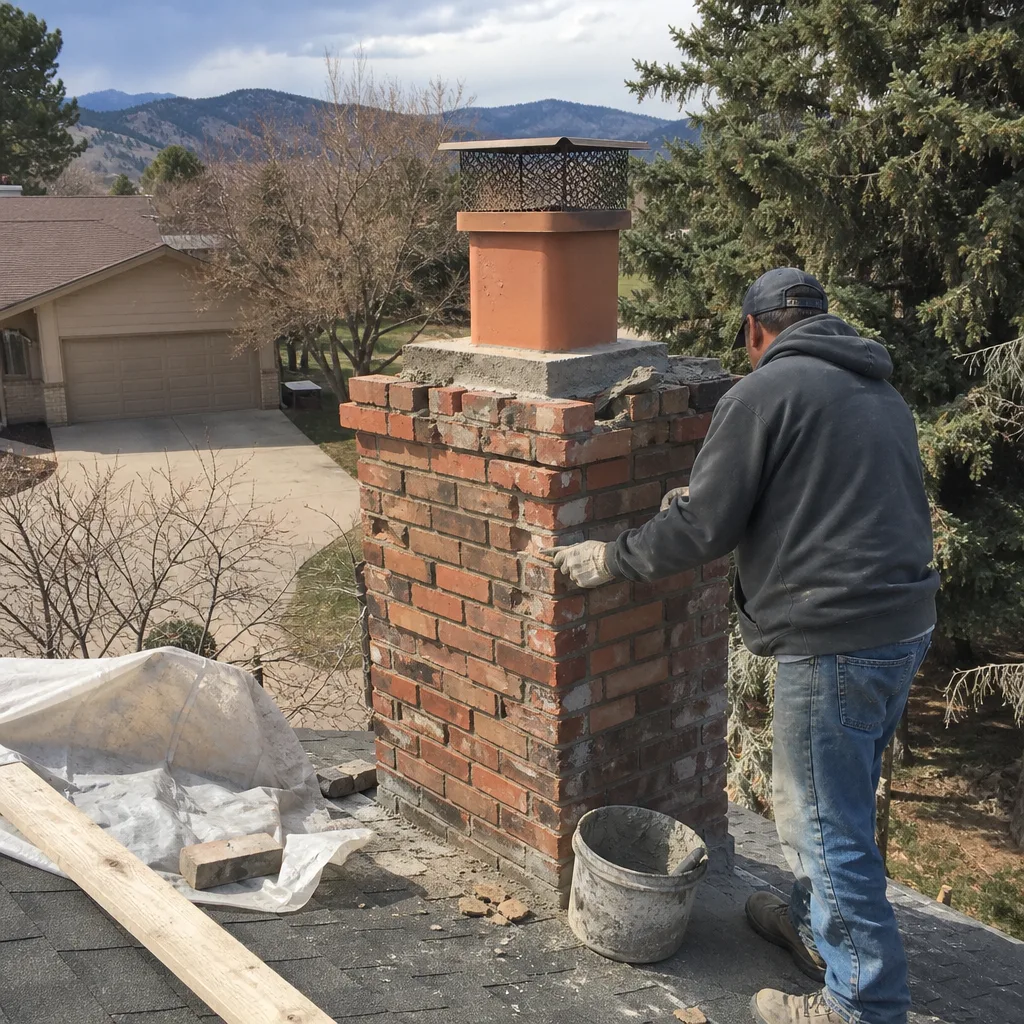
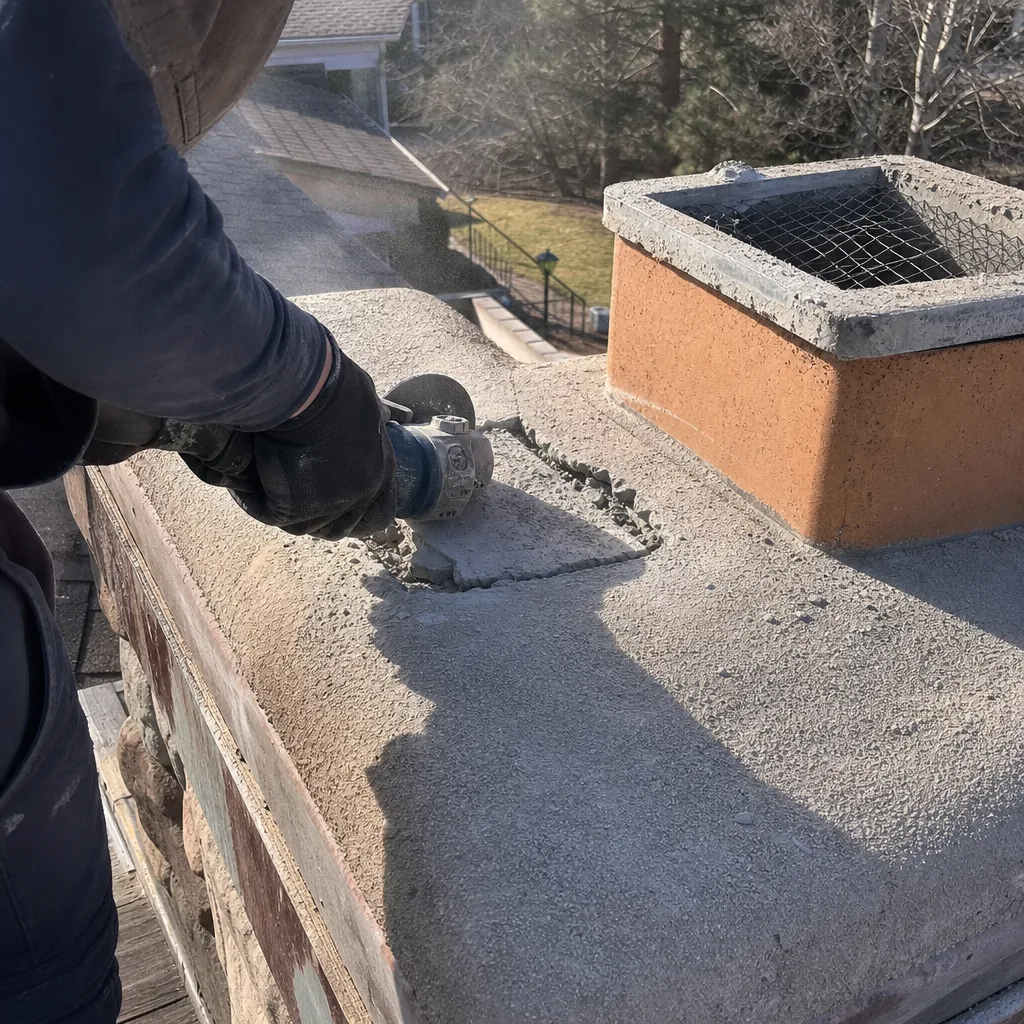
The Front Range’s wind patterns also matter. Westerly winds drive rain and snow into chimney crowns and flashing. We’ve documented more crown deterioration in west-facing chimneys across Boulder’s foothills neighborhoods than in protected valley locations. A contractor should inspect crown integrity as standard practice, not as an add-on discovery.
Local Codes and Restrictions
Boulder County enforces stricter wood-burning regulations than much of Colorado. On high-pollution days, “Red” air quality alerts may restrict wood burning in non-certified appliances. EPA Phase II-certified stoves and inserts are required for new installations. A contractor working in Boulder should know these restrictions and be able to advise whether your appliance qualifies. Recommending a new insert without mentioning certification requirements is incomplete service.
Historic districts like Mapleton Hill and Chautauqua have additional review requirements for exterior chimney modifications. A contractor unfamiliar with Boulder’s Landmarks Board process could create permit complications. For regulatory details, read Chimney Cleaning Permits, Codes & Inspections in CO: What You Need to Know.
Neighborhood-Specific Considerations
Older neighborhoods near the university - Goss-Grove, Whittier, North Boulder - often have unlined masonry chimneys or early clay tile liners that have deteriorated. Newer construction in Gunbarrel and Superior may have factory-built metal chimneys with different failure modes. The inspection approach should match the construction type, not apply a single template.
Common Mistakes to Avoid
- Hiring on price alone without defining “inspection.” The lowest quote often omits camera scanning, photo documentation, or written warranty - protections that cost nothing to include until you need them.
- Assuming CSIA certification means camera documentation. It doesn’t. Ask specifically what the inspection includes and what you’ll receive afterward.
- Booking without verifying Colorado registration. DORA registration takes two minutes to check online. Unregistered contractors may lack insurance that protects you if damage occurs.
- Accepting verbal warranties or “satisfaction guaranteed” without written terms. A warranty you can’t enforce is not a warranty.
- Ignoring Boulder-specific burn restrictions. A contractor who doesn’t mention EPA certification requirements or Red Day restrictions may not understand local compliance needs.
- Waiting until burning season to schedule. October booking volume in Boulder creates two-week backlogs. Spring and summer scheduling means better availability and more time to address findings before cold weather.
- Not requesting the photo record before agreeing to recommended work. If a contractor says your liner is cracked, you should see the crack in a photo with location notation, not accept a verbal description.
When to Call a Professional
Call a chimney professional before burning season begins, after any chimney fire event, when you notice smoke backup or unusual odors, if your fireplace hasn’t been used in over a year, or when purchasing a home with an existing chimney. Carbon monoxide risk from blocked or damaged flues is real and specific - not theoretical fear, but documented cause of residential poisoning when maintenance is deferred.
Emberly Chimney Cleaners Boulder offers free estimates in Boulder - call (970) 598-0453. Every estimate includes a written price, scope, and warranty before any work begins, with camera-scan documentation and a photo record on every visit under Haven Standard Clause 4. Explore more guides & resources on chimney maintenance and safety.
Frequently Asked Questions
Chimney cleaning and inspection in Boulder typically ranges from $180 to $340 for a standard sweep with Level 2 camera inspection, depending on chimney type, accessibility, and creosote level. See our Chimney Cleaning Cost Breakdown: The Boulder Homeowner’s Reference for 2026 for detailed pricing factors. Class III creosote removal or heavy blockage can add $150 to $400. Call (970) 598-0453 for an exact quote - estimates are free, and your written price is delivered before any work starts.
You need a new flue liner only if the existing liner is cracked, deteriorated, or improperly sized for your appliance - and this determination should be based on camera evidence you can see, not a technician’s verbal assessment. In Boulder’s older neighborhoods, unlined masonry chimneys or clay tile liners past 50 years often show spalling, gaps, or mortar loss visible on camera scan. We provide a Free Second Opinion on any written estimate recommending liner replacement; bring us the quote and the photos.
NFPA 211 recommends annual inspection for all chimneys, with cleaning frequency determined by use and creosote accumulation. In Boulder’s climate, active wood-burning fireplaces typically need sweeping every 1 to 2 cords of wood burned, or annually if used as primary supplemental heat. Gas fireplaces require less frequent cleaning but still need annual inspection for debris blockage and venting integrity.
Skipped maintenance leads to creosote buildup that increases chimney fire risk, debris or nest blockage that can force carbon monoxide into living spaces, and undetected liner damage that allows heat transfer to combustible framing. In Boulder’s dry climate, creosote ignites more readily than in humid regions. The consequences escalate from inefficient burning to structural fire to poisoning - all preventable with documented annual inspection.
A chimney sweep removes combustible deposits (creosote, soot, debris) from the flue and firebox; a chimney inspection evaluates the system’s condition, clearances, and safety. Many Boulder contractors bundle both, but the critical distinction is inspection methodology: a true Level 2 inspection includes camera scanning of the flue interior, while a sweep-only visit may include only visual surface checks. Ask specifically which you’re receiving.
Homeowners can perform basic firebox cleaning and damper maintenance, but flue sweeping requires proper brushes, vacuum equipment, and roof access that carries fall risk - plus the knowledge to evaluate what the brush reveals. Class III creosote requires chemical treatment before mechanical removal. For safety and documentation purposes, particularly for insurance or real estate transactions, professional service with photo record is the standard Boulder buyers and insurers expect.
The Bottom Line
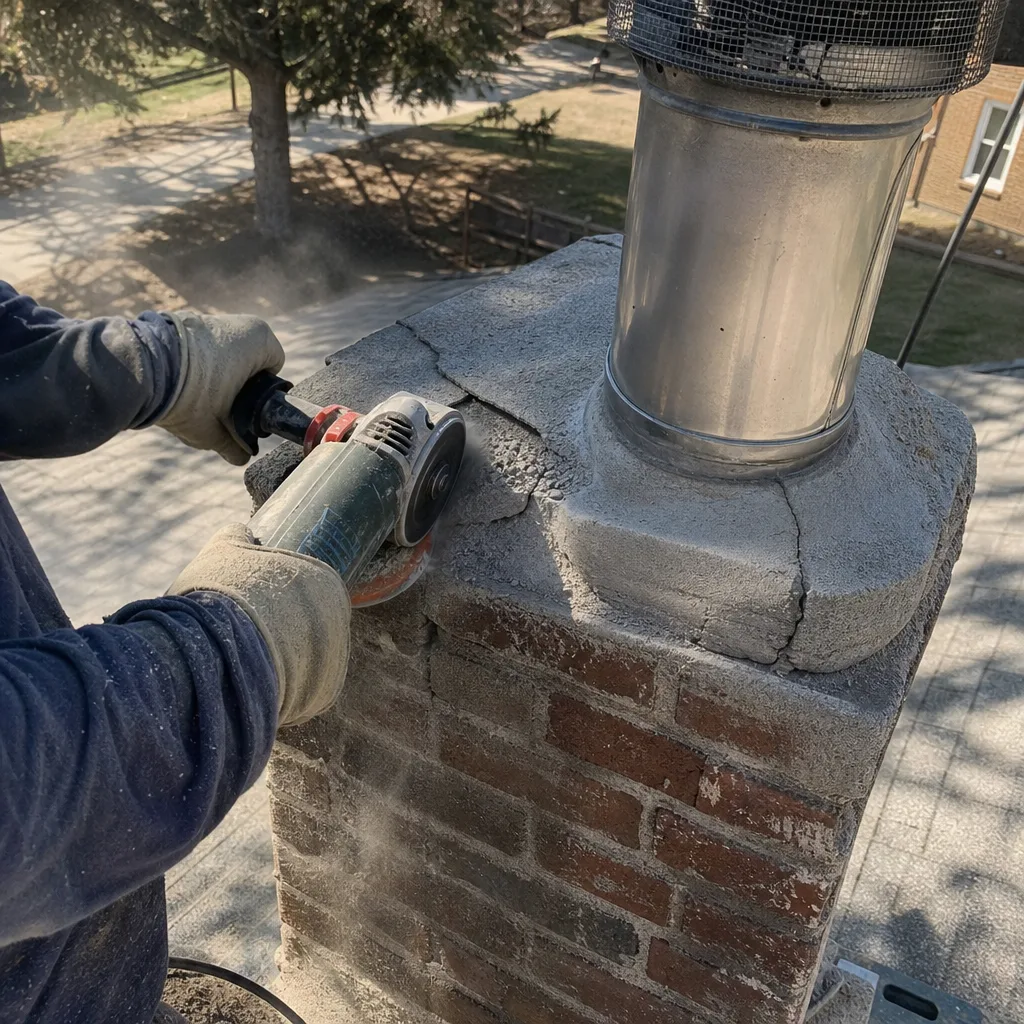
Hiring a chimney contractor in Boulder comes down to documentation discipline. The contractor who puts camera evidence, written price, and warranty terms in your hands before work begins is operating from a different standard than one who discovers “urgent” needs after arrival. Ask the five questions. Verify registration. Compare quotes for specificity, not just bottom-line price. And schedule before burning season demand compresses your options.
We’ve built our practice on the Haven Standard since 2009 because we saw too many homeowners left with verbal assurances and no record. The 38,000 chimneys we’ve inspected and cleaned in that time have produced 38,000 documented photo records - every one with a written price before work started and a written warranty when it was done. That’s not excess caution. It’s the minimum protection a homeowner should expect.
Written by Corrine Halstead, Owner at Emberly Chimney Cleaners Boulder, serving Boulder since 2009.