
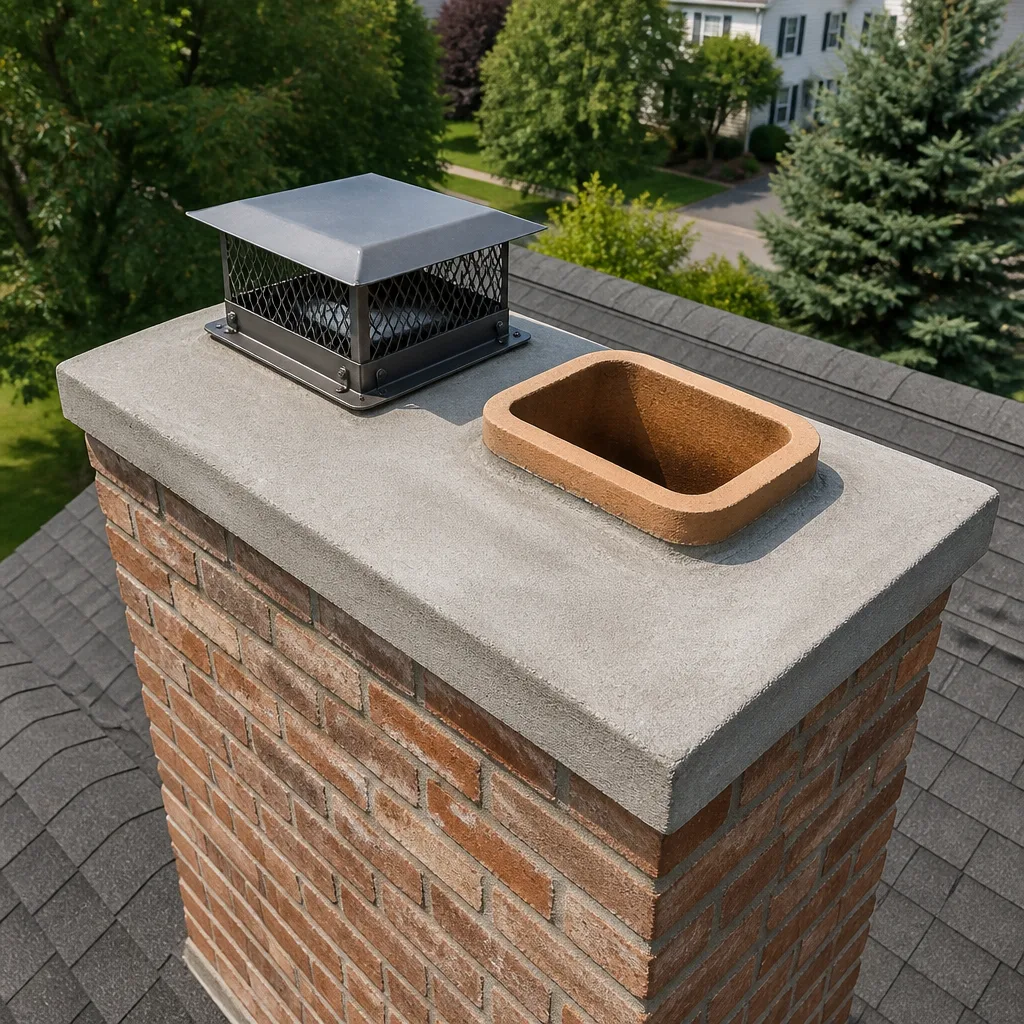
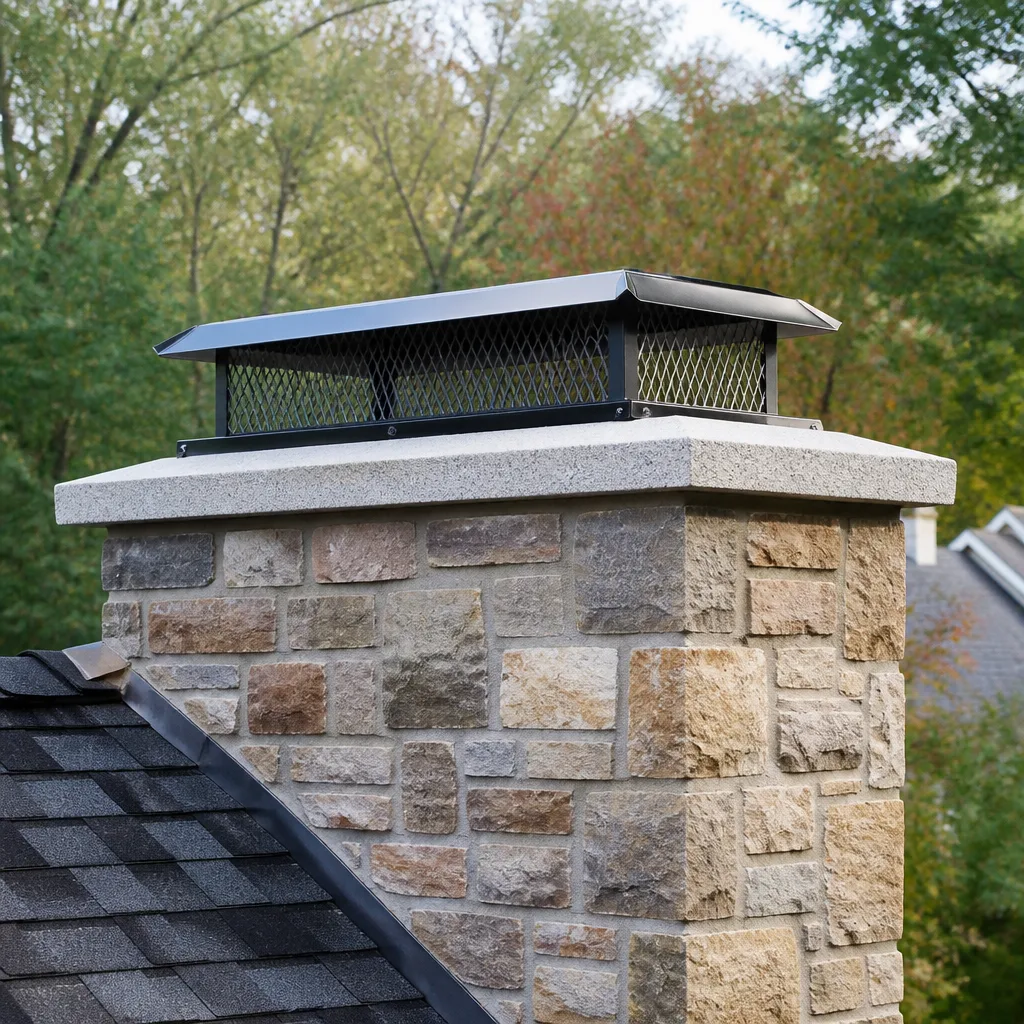
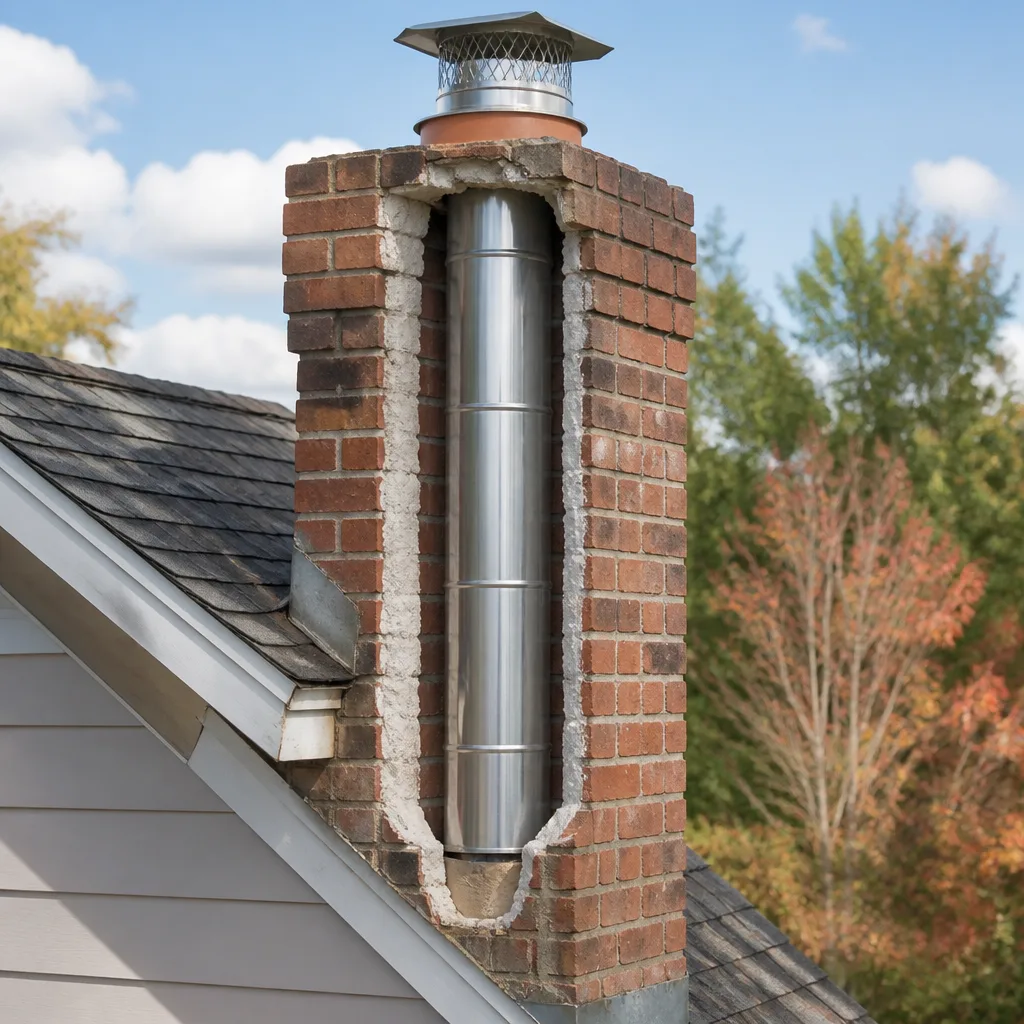
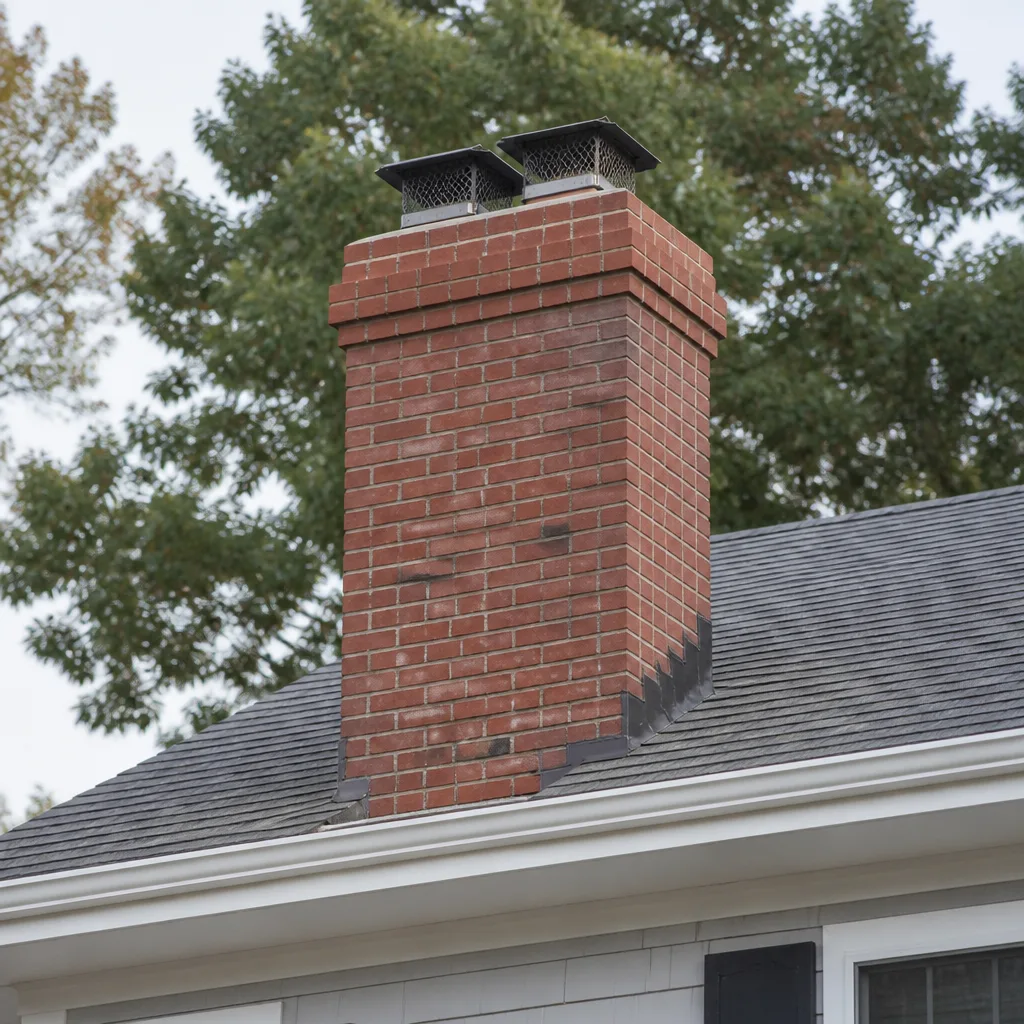
Level 1 sweep and inspection to the NFPA 211 annual standard - flue, crown, cap, and flashing checked and photographed
Chimney sweep logs do not sweep chimneys. They loosen some creosote - which then falls where a brush and vacuum still have to collect it.
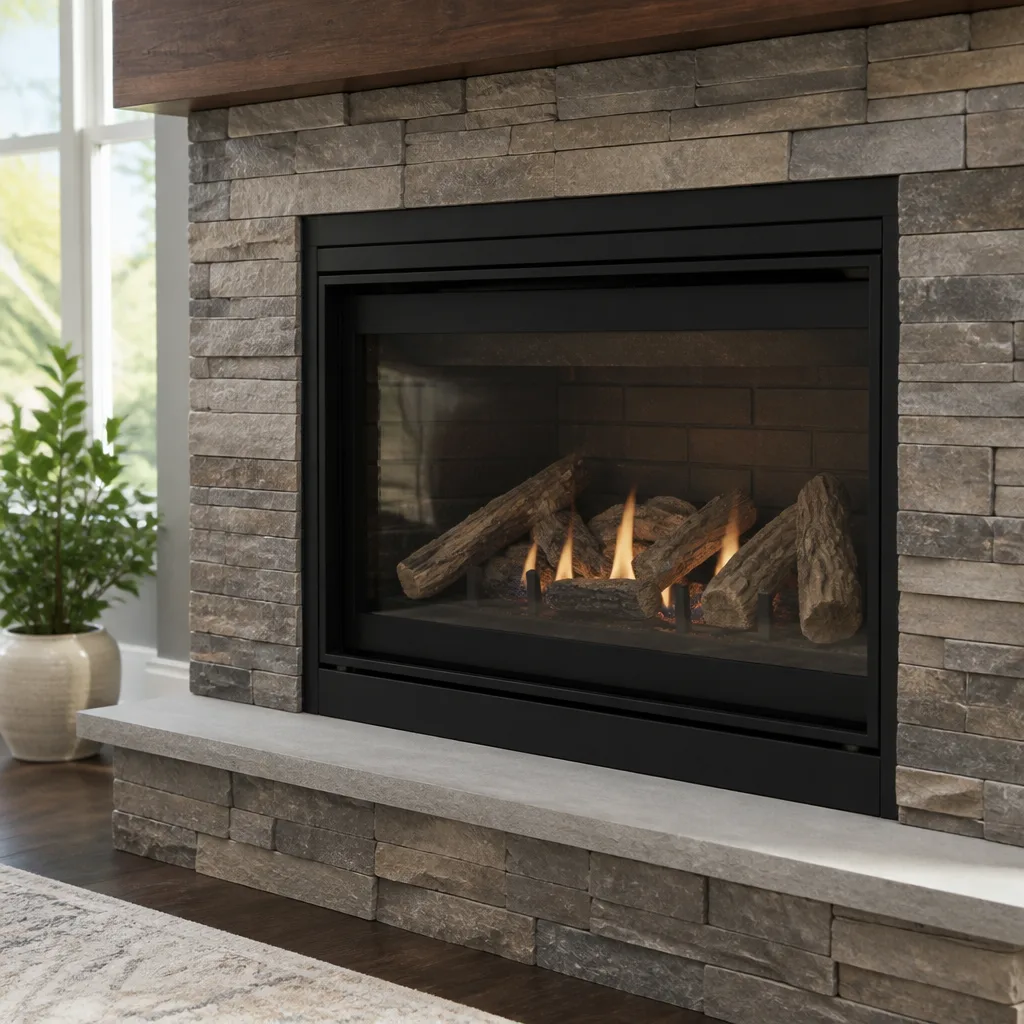
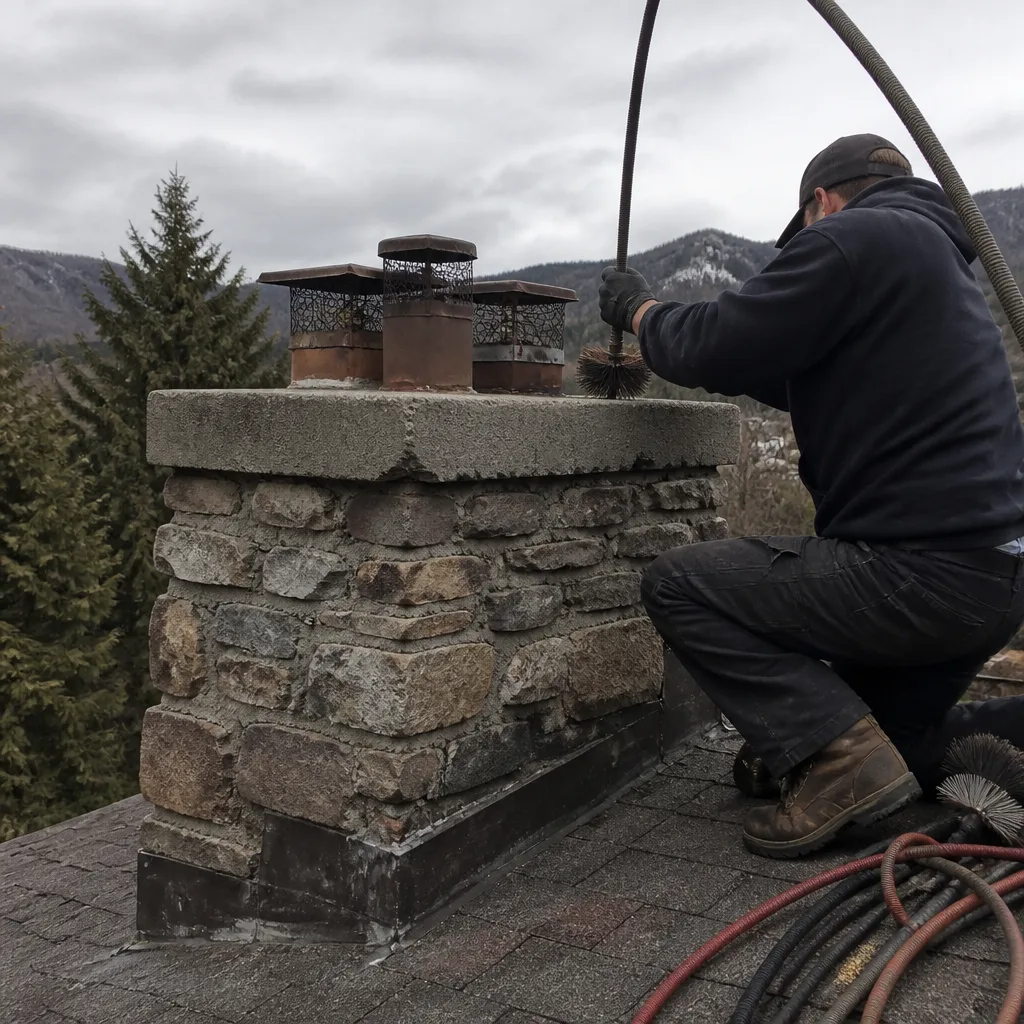 Before
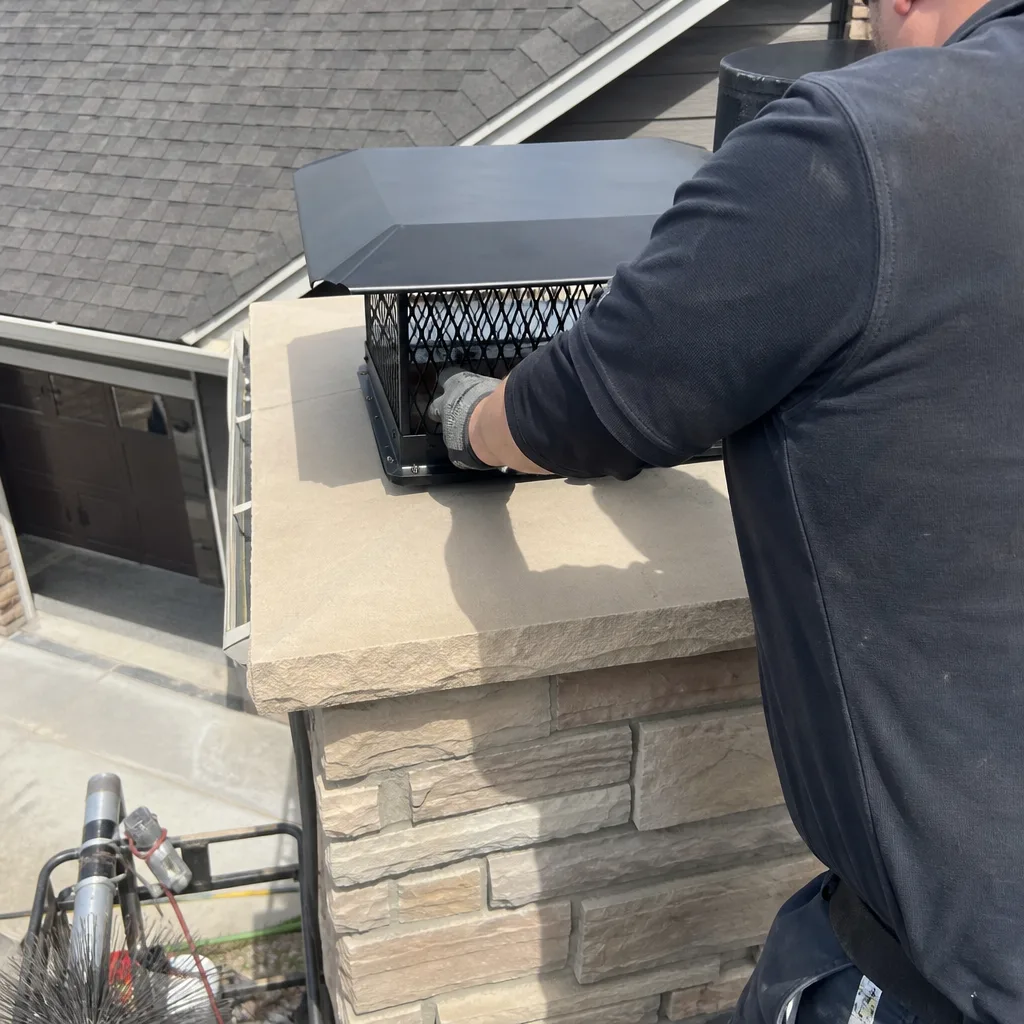 After
After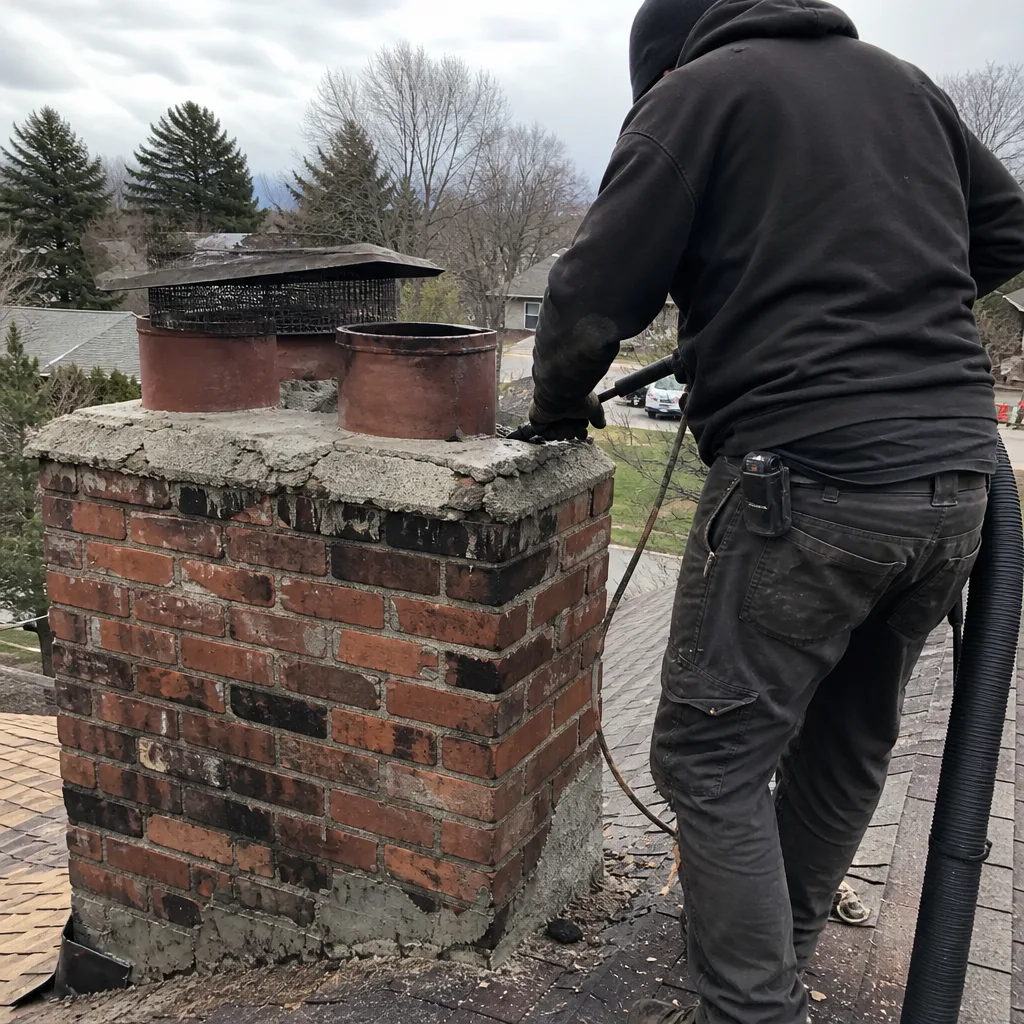 Before
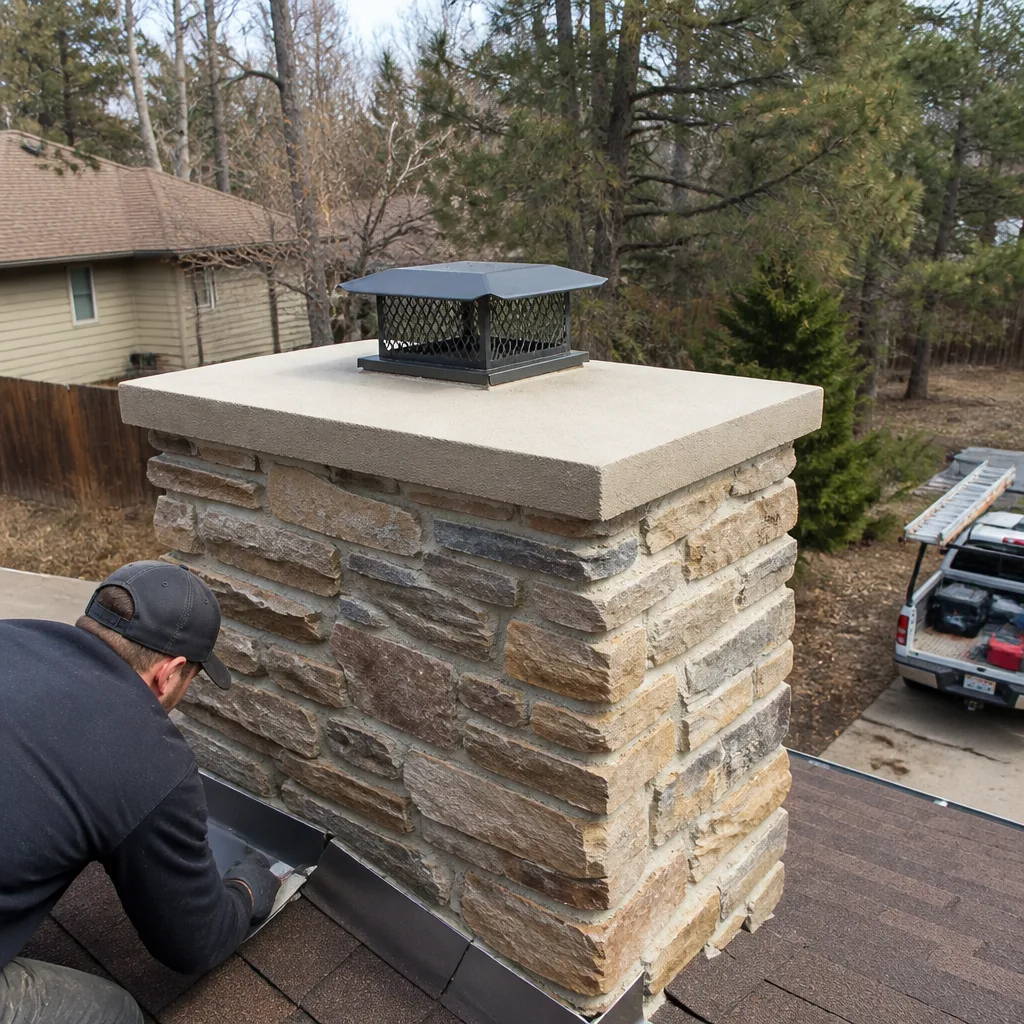 After
After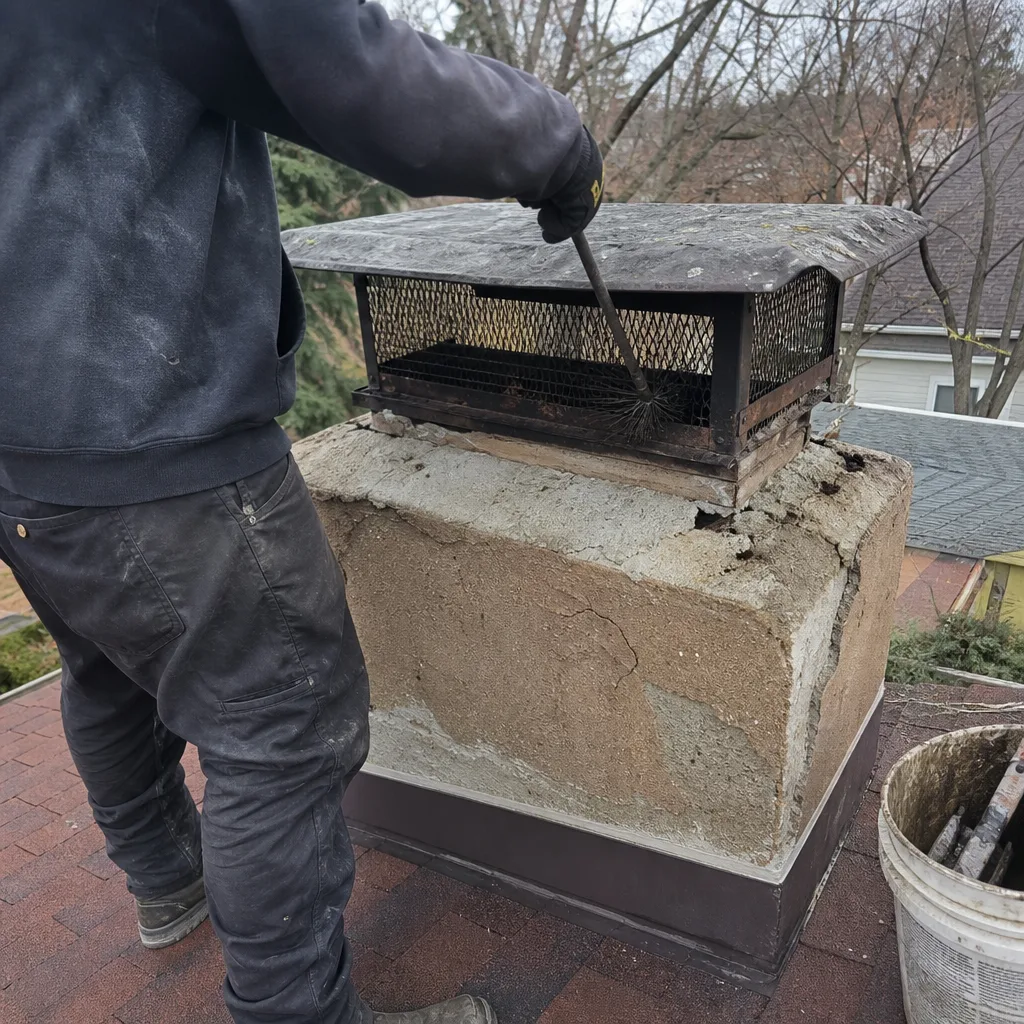 Before
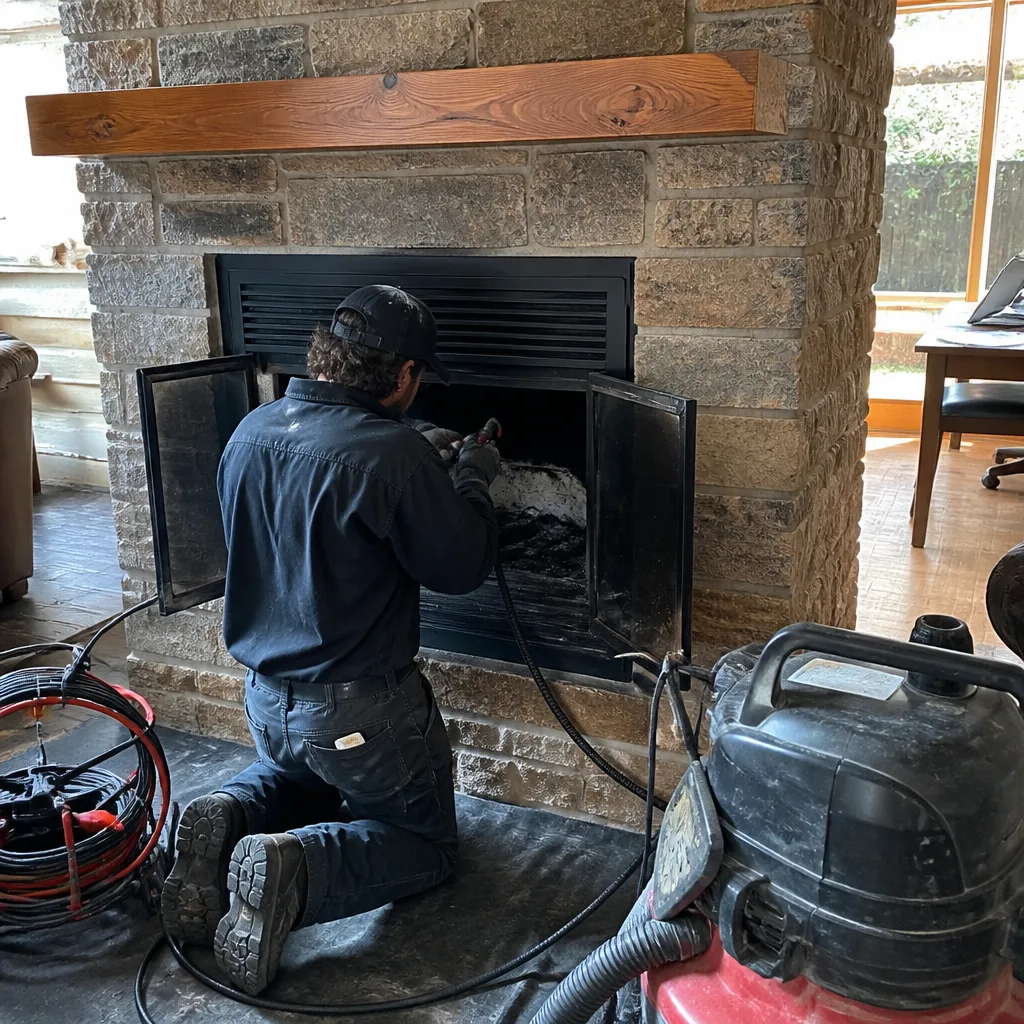 After
AfterSoot Removal in Boulder, CO
Soot removal in Boulder typically costs between $149 and $320, depending on flue depth, soot load, and whether a full Level 2 camera inspection is included. Most jobs are completed in a single visit, and every one of them starts with a written price before a brush or rod enters your fireplace.
Soot is the soft, powdery black residue that collects on flue liner walls, smoke chamber surfaces, and firebox brick every time you burn wood. It’s not the same thing as creosote – soot is the lighter, earlier-stage deposit – but left alone long enough, it hardens and converts into the glazed, tar-like Class II or Class III creosote that’s genuinely difficult and expensive to remove. Catching it at the soot stage is simply cheaper and safer, and it’s one of the main reasons we built Chimney Cleaning & Sweep in Boulder around annual documentation rather than reactive repair.
Emberly Chimney Cleaners Boulder has documented more than 38,000 chimney inspections and cleanings since 2009 – every single one with a written scope, a written price, and a photo record on completion. If you’re seeing black smudging around your firebox, smelling something stale when the fireplace isn’t running, or just haven’t had the flue cleaned in more than a year, Chimney Cleaning & Sweep services are what you need - call us at (970) 598-0453. A live person answers every call, every day.
When You Need Soot Removal
Soot accumulates quietly. By the time it’s obvious, the buildup is usually heavy enough that a single season of regular burning could push it into creosote territory. Here are the situations where Boulder homeowners typically reach out:
- Black smudging on the firebox surround or mantel. When soot migrates past the smoke shelf and onto the face of the fireplace, it means the smoke chamber isn’t containing combustion byproducts the way it should. This often shows up in older Boulder homes where the smoke chamber has never been parged (resurfaced with a refractory compound like HeatShield).
- A persistent stale or smoky smell, even in warm weather. Boulder sits at 5,430 feet elevation, and the pressure dynamics at altitude mean downdrafts are more common here than at lower elevations. Soot-coated flue walls hold and amplify odors, and on a warm, low-pressure afternoon in the Foothills, those smells push right back into your living room.
- Visible black deposit on the firebox floor or damper. If you open the damper and see a loose, powdery layer of black material sitting on the smoke shelf, soot is present and building. This is the easiest stage to address – before it fuses to the liner surface.
- It’s been more than 12 months since the last cleaning. NFPA 211 – the code our Level 2 inspection standard references – recommends annual inspection and cleaning for any chimney in active use. Boulder winters are long, and the shoulder-season burns in March and October add up fast.
- You’ve switched fuel types or stoves. If you recently moved from a traditional open fireplace to a wood insert, or switched from hardwood to softwood (pine burns common in the Boulder foothills), soot and creosote chemistry changes. A fresh baseline inspection and cleaning makes sense.
- You’re buying or selling a home in Boulder. Lenders and home inspectors regularly flag chimney documentation gaps during real estate transactions along the Front Range. A Level 2 inspection with a photo record satisfies most underwriter requests and gives buyers something concrete to review.
Our Soot Removal Process
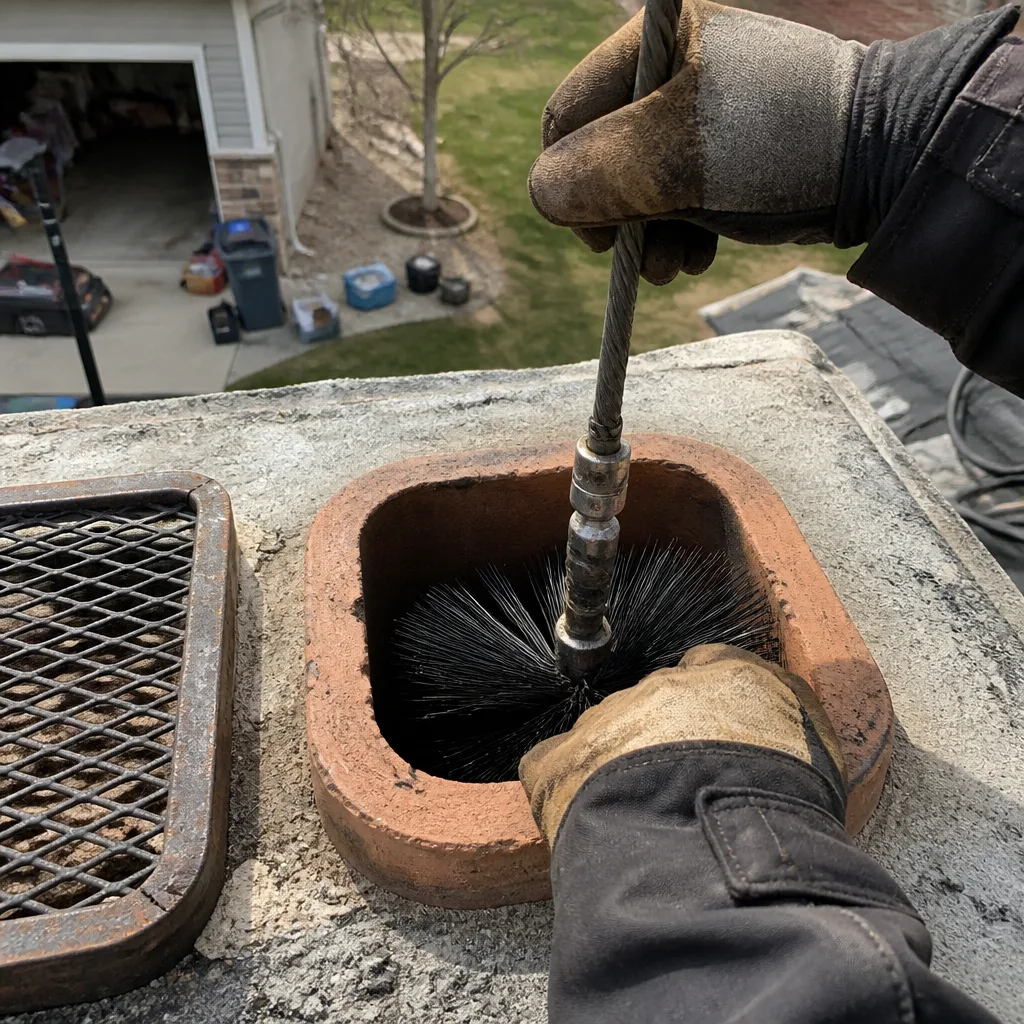
We don’t show up with a flashlight and a handshake. Every soot removal visit follows the same documented sequence, and you’ll have a written price in hand before step one begins.
- Written scope and price, delivered upfront. Before any equipment enters your home, we hand you a written price with a defined scope of work. This is Haven Standard Clause 1 – “Have it in writing” – and it’s non-negotiable on every job. No surprises after the van is already parked out front.
- NFPA 211 Level 2 camera scan of the flue. We run a camera down the flue liner before we clean anything. This gives us a pre-cleaning baseline – the actual condition of the liner, smoke chamber, and firebox – captured in photos and footage that belong to you. We’re looking for liner cracks, mortar joint deterioration, and the soot or creosote classification so we know exactly what we’re dealing with before we touch it.
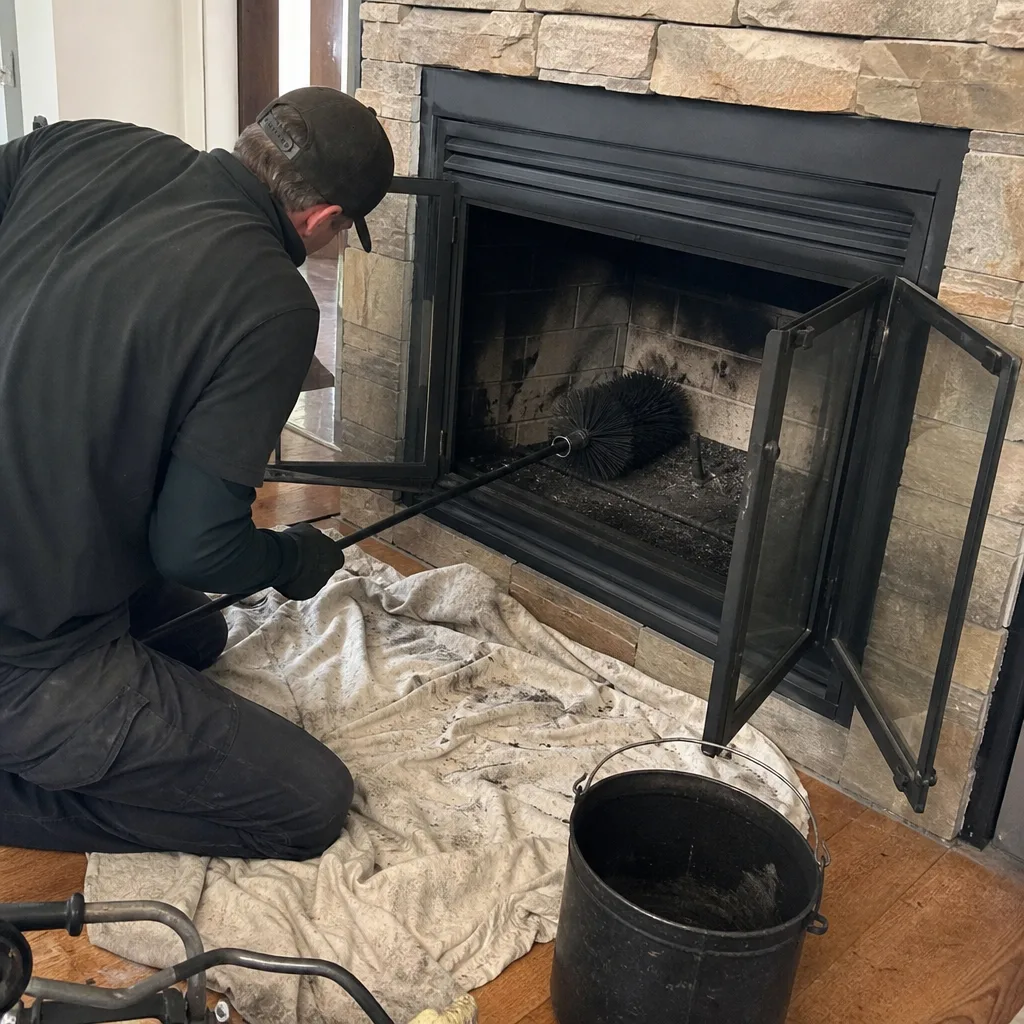
- Protected drop cloth setup and HEPA-filtered vacuum containment. Soot is fine-particulate. Done sloppily, a flue cleaning covers a living room in black dust. We seal the firebox opening with a containment barrier connected to a HEPA-filtered vacuum so the negative pressure inside the flue is higher than the room pressure outside it. The dust goes into the vacuum, not onto your furniture.
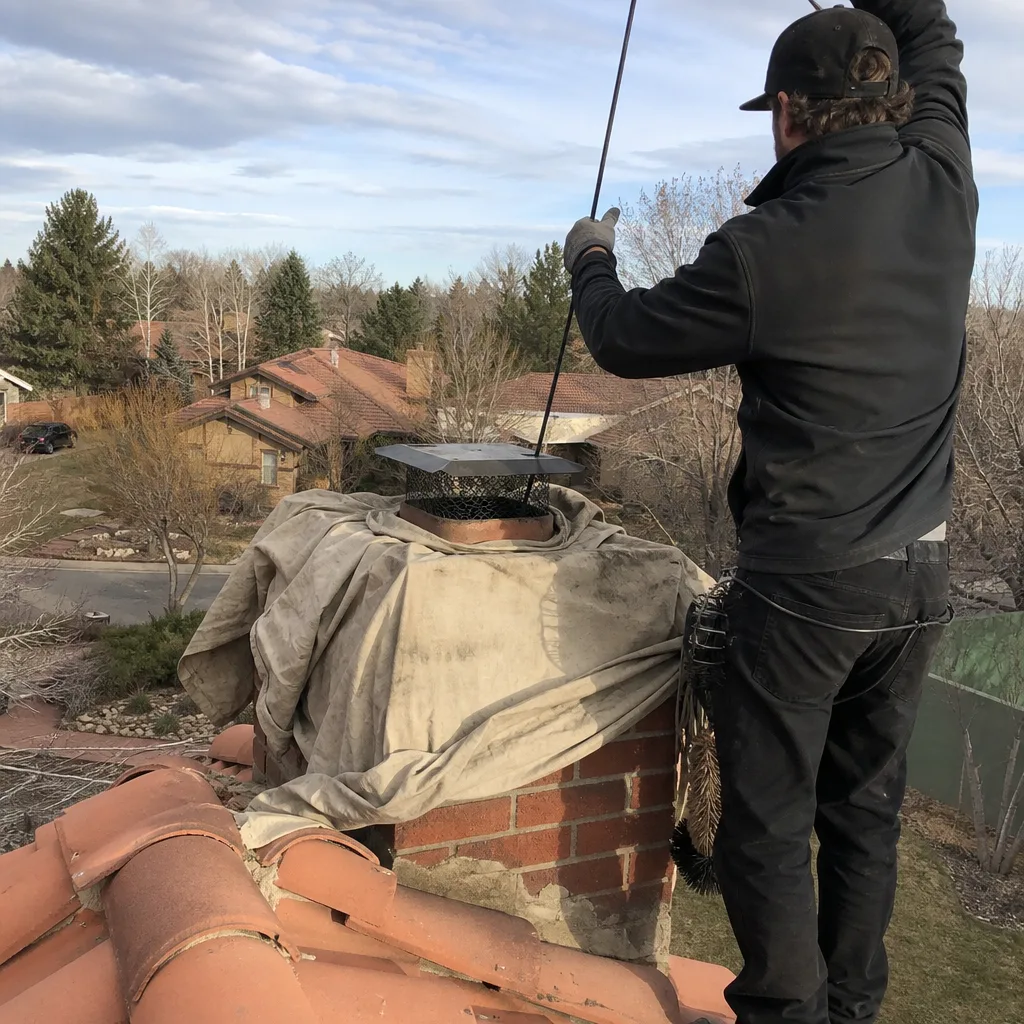
- Rotary brush cleaning from cap to firebox. We work top-down with chimney brushes sized to your specific flue liner diameter – round, square, or rectangular – loosening the soot deposit layer by layer. For Boulder homes with taller chimneys (two-story Victorians in Mapleton Hill, for example, can run 30 feet of flue), we use sectional rods and adjust brush diameter to maintain contact pressure throughout the entire column.
- Smoke chamber and firebox hand-cleaning. Brush rods reach the straight flue sections, but the smoke chamber – the funnel-shaped cavity above the damper – requires hand tools and inspection mirrors. We clean corbelled (stepped) smoke chambers with particular care because the horizontal ledges trap soot in ways the straight flue walls don’t. If we find smoke chamber damage during this step, we’ll document it and quote a HeatShield parging repair separately, in writing, before discussing next steps.
- Post-cleaning camera scan and documented photo record. We run the camera again after cleaning. You get before-and-after photos, a written record of what was found, what was removed, and the current condition of your liner and smoke chamber. Clause 4 of the Haven Standard requires this documentation on every job – it’s not an optional add-on. If any follow-up repair is needed, the record is already in hand for insurance or permit purposes.
BeforeAfterSoot Removal Pricing in Boulder
Soot removal in Boulder runs between $149 and $320 for most single-flue fireplaces. That range reflects real variation – it’s not a bait-and-switch opener. Here’s what moves the number:
- Flue length and diameter. A ranch-style home in South Boulder with a single-story fireplace and a short flue column takes less time and fewer rod sections than a tall Victorian on Mapleton Hill. Longer flues cost more – that’s straightforward.
- Soot load and deposit stage. Light soot on a regularly serviced flue cleans quickly. If the soot has begun hardening toward Class II creosote – sticky, tar-like, and baked onto the liner – removal is slower and sometimes requires a chemical treatment applied before mechanical brushing. We’ll tell you the classification from the pre-cleaning camera scan before pricing any additional treatment.
- Smoke chamber condition. A parged smoke chamber with smooth walls cleans faster than a corbelled chamber with deep horizontal ledges. Older Boulder homes, particularly those built before the 1970s, often have unparged corbelled chambers that take additional hand-cleaning time.
- Number of flues. Some Boulder homes have two or three flues running in the same chimney stack – one for the fireplace, one for a furnace, sometimes one for a water heater or wood stove. Each flue is quoted and cleaned separately.
| Service | Typical Range (Boulder) |
|---|---|
| Standard soot removal, single flue | $149 – $220 |
| Soot removal + NFPA 211 Level 2 camera inspection | $220 – $320 |
| Heavy deposit / early creosote treatment (chemical pre-treat + brush) | $280 – $480 |
| Additional flue (same chimney stack) | $89 – $149 each |
Every price above comes with a written scope before work starts, a documented photo record on completion, and the 365-Day Done Right Promise. If something isn’t right after we leave, we come back and make it right – no debate, no fee. That’s not marketing language; it’s written on every job ticket.
We also offer a free second opinion on any written competitor estimate. Bring us a quote, and we’ll review it line by line and tell you whether the scope and price are reasonable – no obligation to book with us.
For an exact number specific to your Boulder home and flue, call (970) 598-0453. There’s no voicemail on that line.
Why Boulder’s Altitude and Climate Matter for Soot Buildup
This isn’t boilerplate. Boulder’s elevation genuinely changes how soot and creosote behave, and any sweep working here regularly knows it.
At 5,430 feet, air is about 17% less dense than at sea level. Wood fires get less oxygen per cubic foot of air, which means combustion is slightly less complete – more unburned carbon particles exit the firebox and coat the flue. Boulder homeowners who burn the same volume of wood as, say, a Denver homeowner at 5,280 feet are producing marginally more soot per fire, and Boulder sits higher than most Front Range cities.
The diurnal temperature swings here are also significant. A January afternoon can be 58 degrees, and by 10 PM it’s 14. That rapid cycling expands and contracts mortar joints and liner sections, which over years creates micro-cracks that soot and moisture work into. Our pre-cleaning camera scan catches these cracks before they become water infiltration problems.
Chinook winds – the warm, dry downslope winds that roll off the Rockies across Boulder specifically – are a local chimney phenomenon. A strong Chinook depressurizes the flue and pulls combustion gases back into the house. If your chimney has heavy soot coating the liner, those gases carry soot odor and particulates with them. North Boulder and the Mapleton neighborhood get the strongest Chinook effects; if you live there and notice fireplace smell on warm, windy days, soot load is usually the first thing to check.
Soot vs. Creosote: What the Camera Shows
When the camera comes back up, we describe what we found in plain terms before explaining what it means. The three deposit classes matter because they determine what cleaning approach is safe and effective:
- Class I (soot): Loose, powdery, black or gray. Brushes out in a single visit. This is what annual cleaning prevents from becoming anything more serious.
- Class II creosote: Drier, flaky, or crunchy – looks like dried tar or puffed material. Still mechanically removable in most cases, but takes more time and sometimes a chemical treatment to soften it before brushing.
- Class III creosote: Thick, glossy, heavily glazed. This is the stage that creates real fire risk. Mechanical brushing alone won’t remove it; it requires chemical application over multiple visits or, in severe cases, professional chemical stripping. We document Class III in writing and photograph it before discussing options – we don’t quote a single cleaning and disappear.
Soot removal addresses Class I deposits and the early edge of Class II. If the camera shows something more advanced, we tell you exactly what it is, photograph it, and give you a written price for the appropriate treatment before any work starts.
Key Takeaways
- Soot removal in Boulder runs $149-$320 for most single-flue fireplaces, with a written price delivered before work begins.
- Boulder’s altitude (5,430 feet) and Chinook wind patterns accelerate soot buildup compared to lower-elevation cities – annual cleaning is the appropriate interval for active-use fireplaces here.
- Every visit includes a pre- and post-cleaning NFPA 211 Level 2 camera scan with a documented photo record under Haven Standard Clause 4.
- Soot (Class I) is the safest and cheapest deposit stage to address. Letting it progress toward Class II or Class III creosote costs more and takes longer.
- The 365-Day Done Right Promise is on every job ticket: if it’s not right, we come back and make it right.
FAQs – Soot Removal
How much does soot removal cost in Boulder, CO?
How Much Does Chimney Cleaning & Sweep Cost? (2026 Price Guide) - Boulder, CO: soot removal runs between $149 and $320 for a single-flue fireplace, depending on flue length, deposit load, and whether a Level 2 camera inspection is included. The written price is given to you before any work starts – not after the technician is already in your home. Call (970) 598-0453 for a specific quote tied to your chimney’s measurements; it’s a free estimate and there’s no obligation to book.
How often should I have soot removed from my chimney in Boulder?
NFPA 211 recommends an Annual Sweep for any chimney in regular use, and that holds doubly true in Boulder. The city’s high-altitude combustion conditions, wide temperature swings, and Chinook wind patterns mean flues here accumulate deposits slightly faster than at lower elevations. If you’re burning wood three or more times a week through November through March – which is typical in neighborhoods like Table Mesa or Newlands – an annual visit before each heating season is the right interval.
Is soot removal the same as a chimney sweep?
Soot removal is one part of what a chimney sweep addresses. A full sweep covers the flue liner, smoke chamber, smoke shelf, and firebox, and may include a camera inspection. Soot removal is specifically the mechanical and manual extraction of Class I carbon deposits from those surfaces. When we quote a soot removal visit, we’re quoting the complete cleaning sequence – not just the straight flue section – because soot collects on all of those surfaces, not just the liner walls. See our full Chimney Cleaning & Sweep in Boulder page for what’s included in each service tier.
Can I remove soot from my fireplace myself?
The firebox face and visible brick around the damper can be wiped down with a dry chemical sponge or a diluted trisodium phosphate (TSP) solution – that’s cosmetic cleaning and carries no meaningful risk. But brushing the flue liner, smoke chamber, or smoke shelf yourself is a different matter. Without HEPA vacuum containment, a single brush stroke releases enough fine soot particulate to coat a room in seconds. More practically, you can’t see what’s in the flue without a camera, so you won’t know whether you’re cleaning soot or abrading a cracked liner. The camera scan is what turns cleaning from guesswork into documentation. It’s also the reason we know what we’re handing back to you at the end of the visit.
Will soot removal fix the smell coming from my fireplace?
In most cases, yes – soot-coated flue walls are the primary source of that stale, acrid smell that shows up in Boulder homes during warm spells or when the Chinook winds roll in. Once the soot is removed and the liner is clean, the odor source is gone. If the smell persists after cleaning, the camera record will usually show why – a compromised liner joint, a water infiltration point, or a draft issue that’s allowing air to bypass the damper. We document what we find either way, and if there’s a secondary cause, you’ll have a written explanation and a separate written price before any additional work is discussed.
For a free estimate on Chimney Cleaning & Sweep Near Me in Boulder, CO, call (970) 598-0453. A live person picks up every call. We’ll tell you the price range for your specific chimney before we schedule anything, and you’ll have a written scope in hand before our technician touches a single rod.
Written by Corrine Halstead, Owner at Emberly Chimney Cleaners Boulder, serving Boulder.