
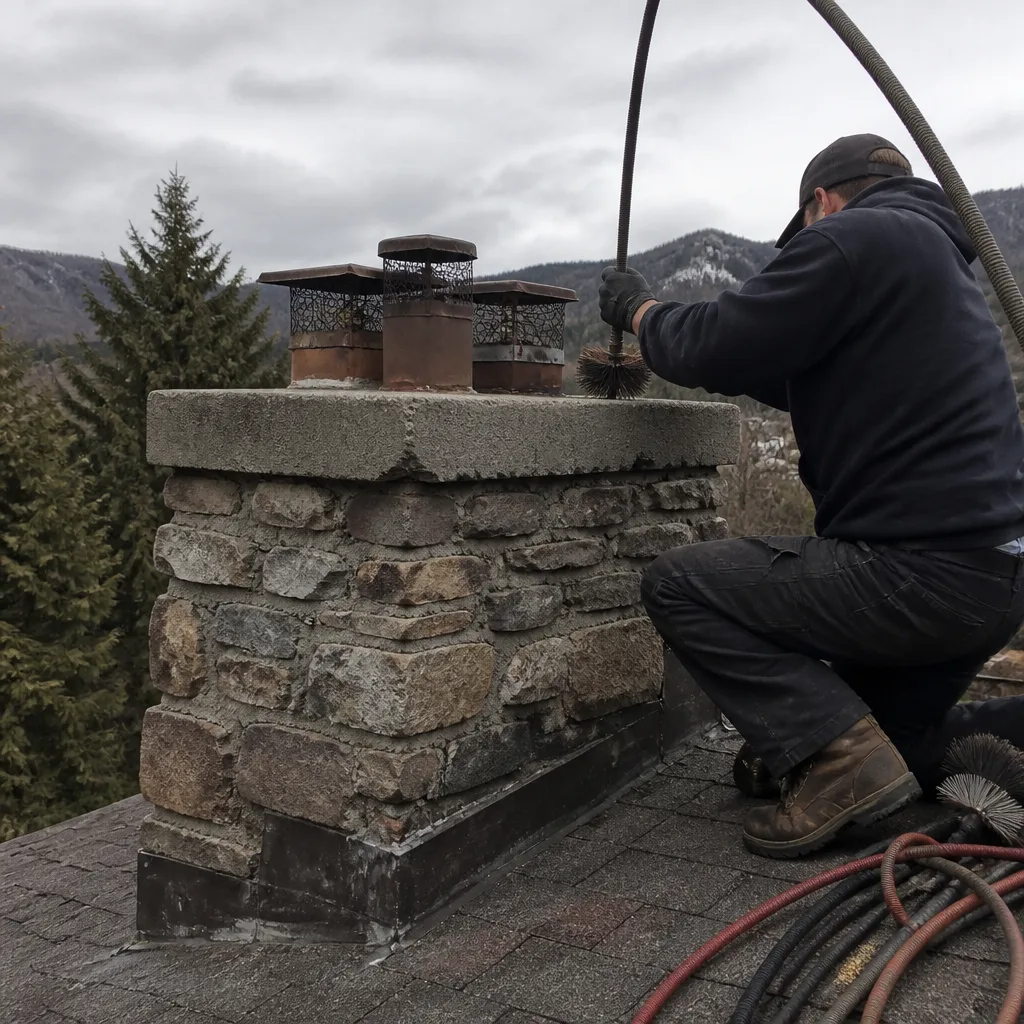
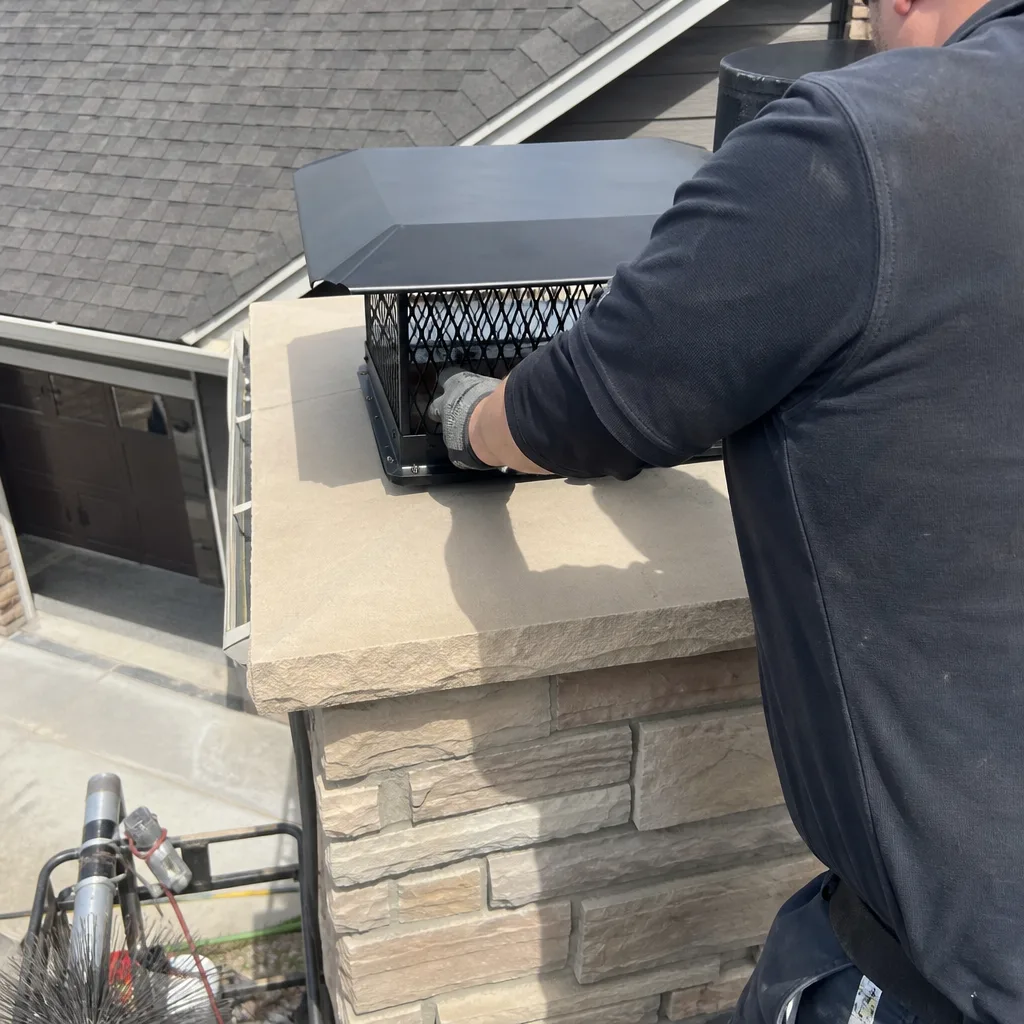
Level 1 sweep and inspection to the NFPA 211 annual standard - flue, crown, cap, and flashing checked and photographed
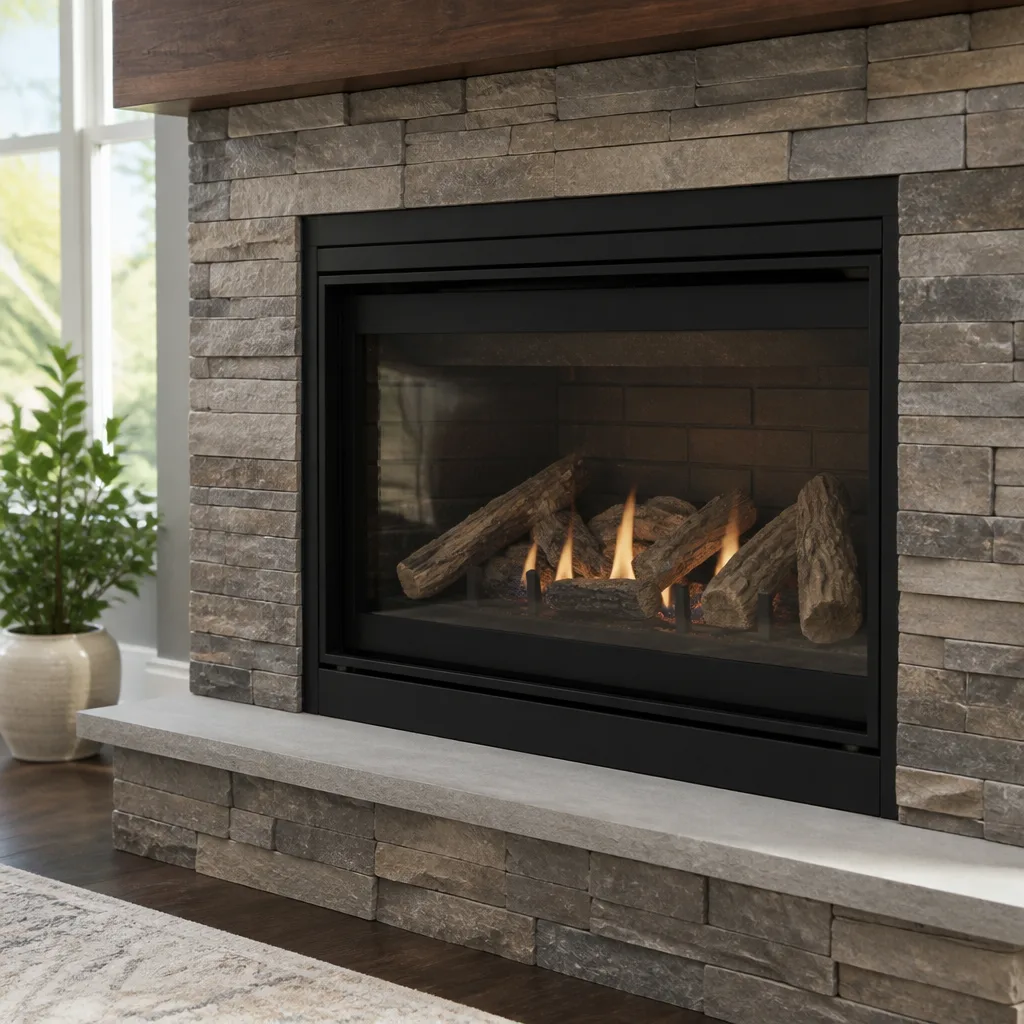
Chimney sweep logs do not sweep chimneys. They loosen some creosote - which then falls where a brush and vacuum still have to collect it.
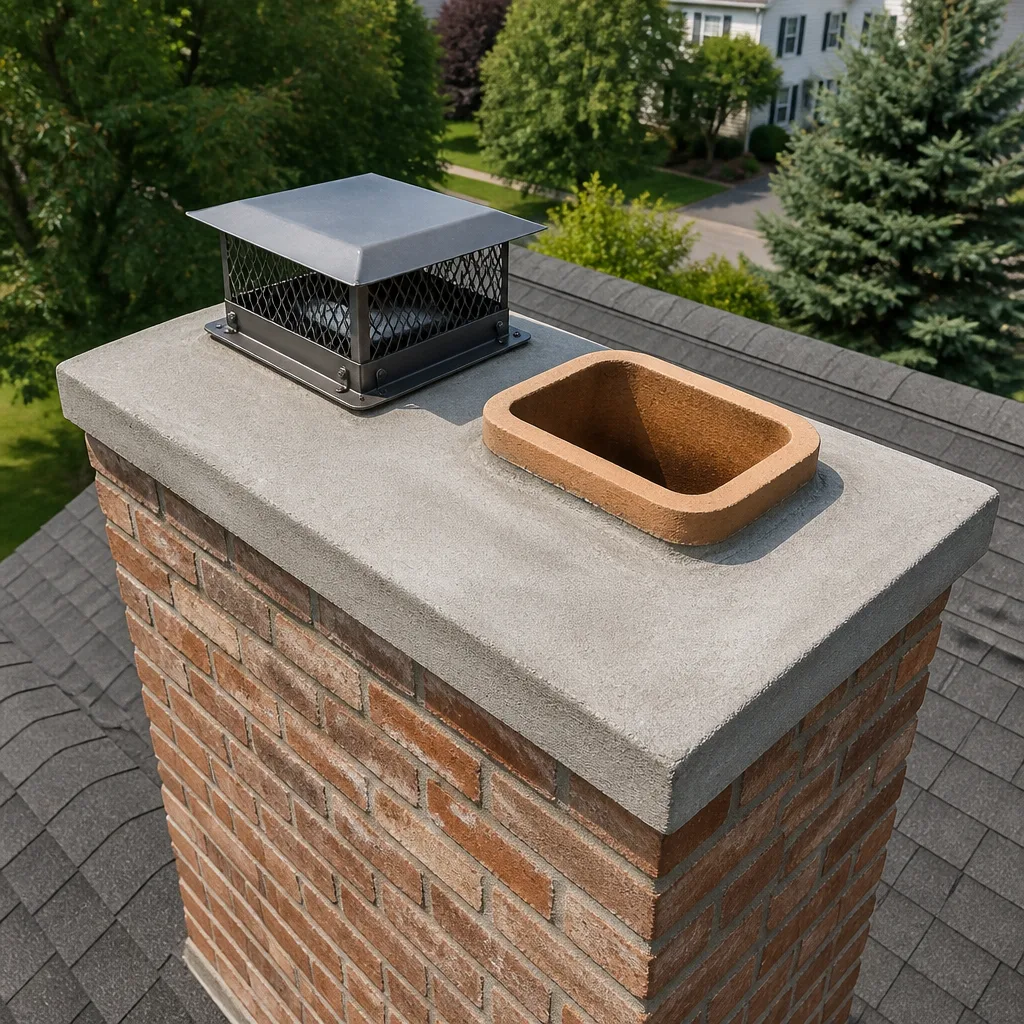
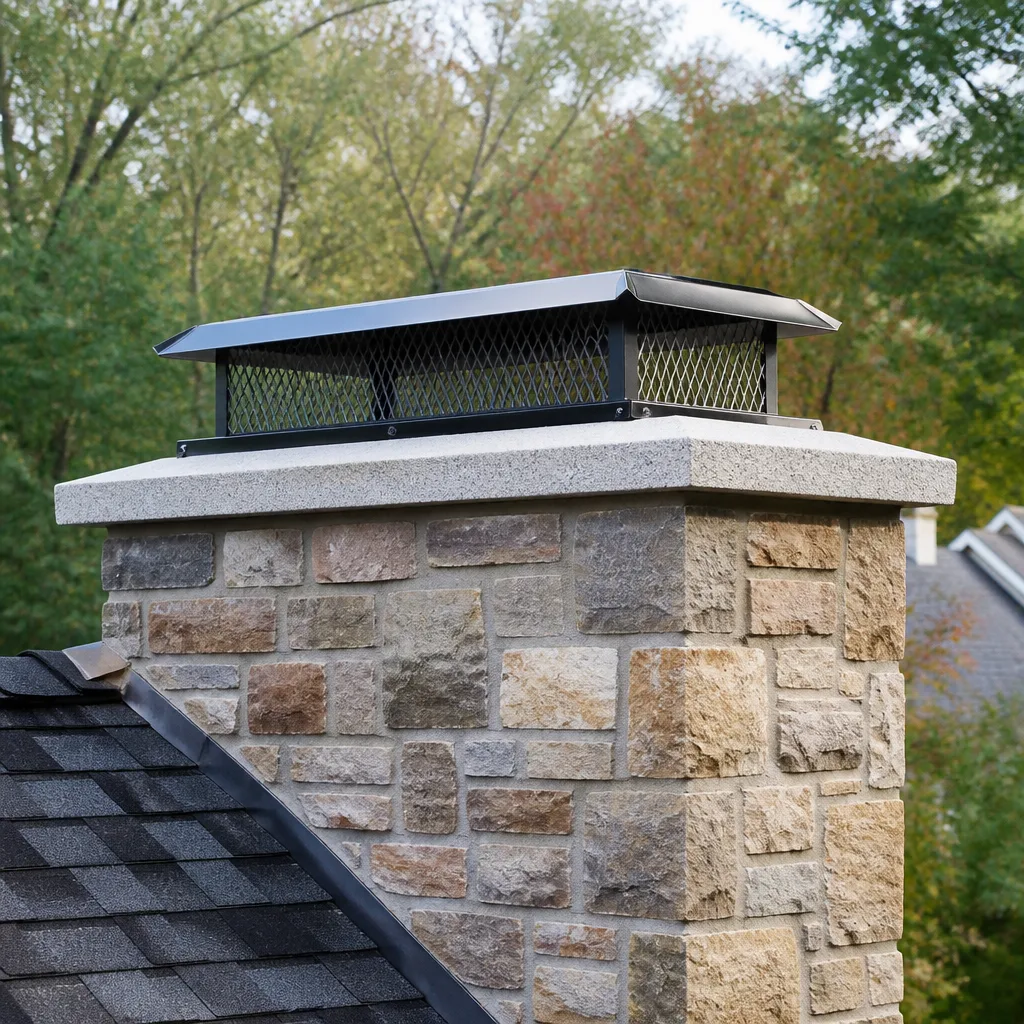
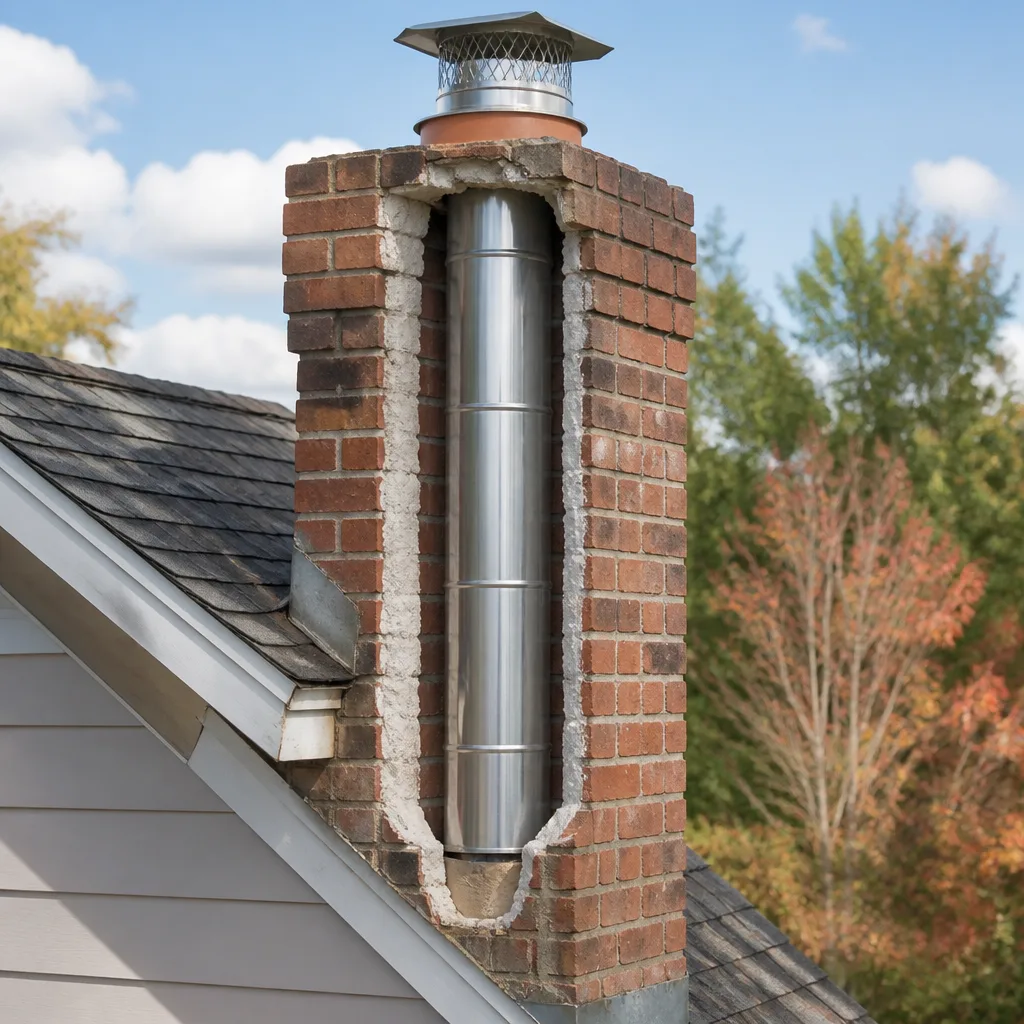
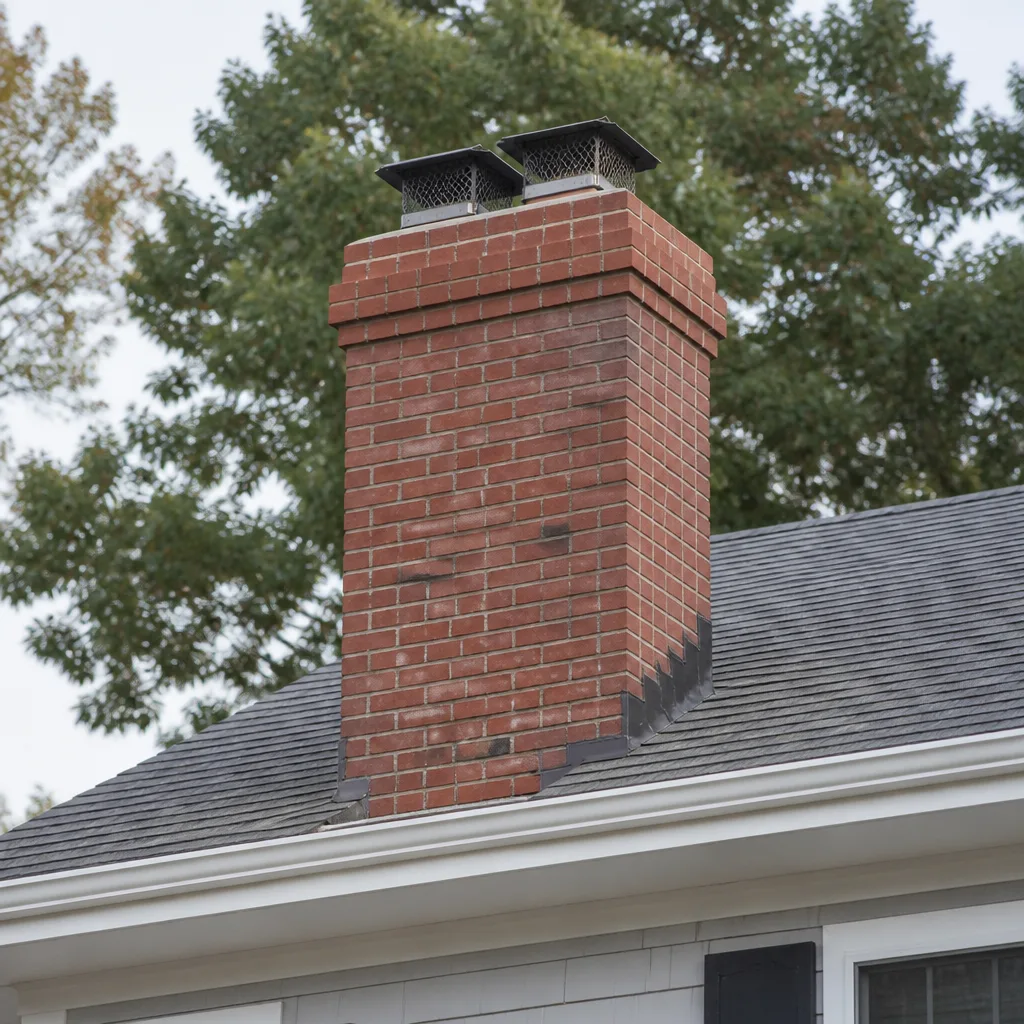
 Before
 After
After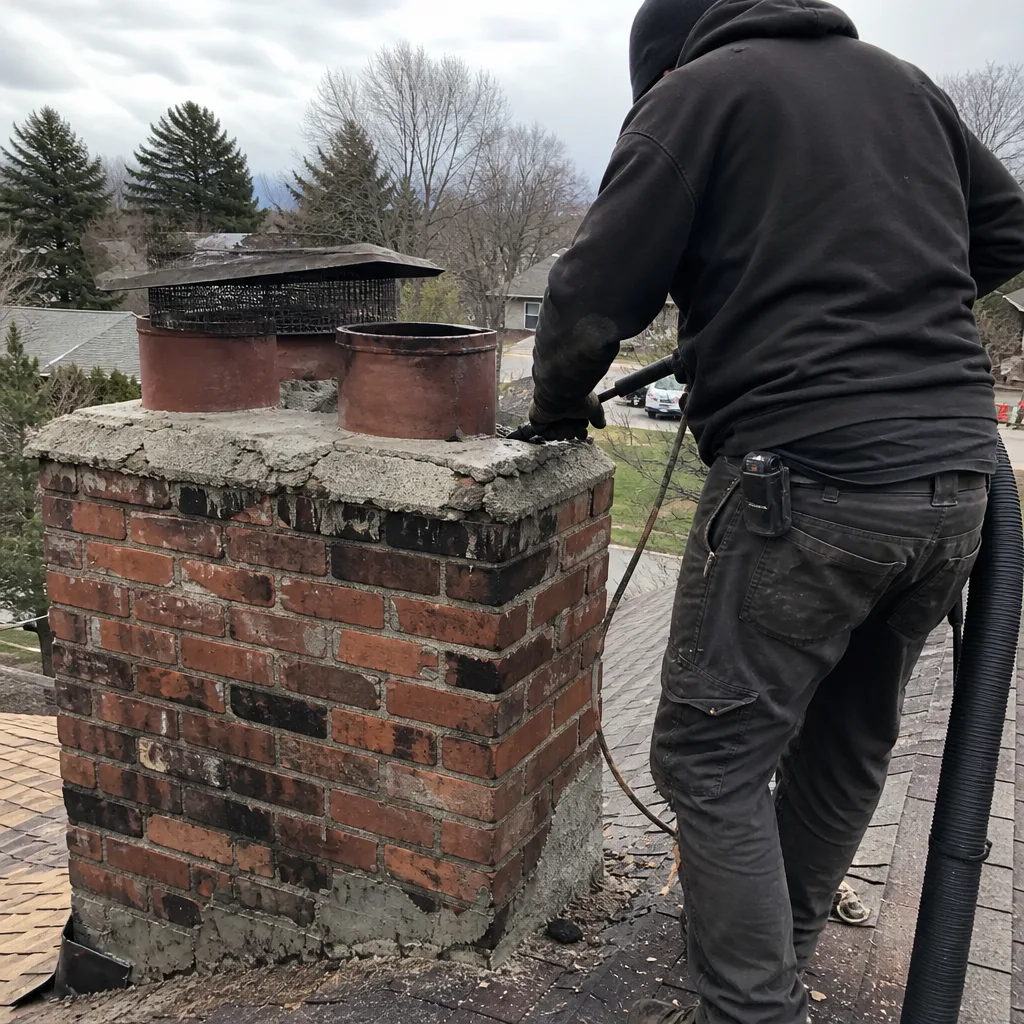 Before
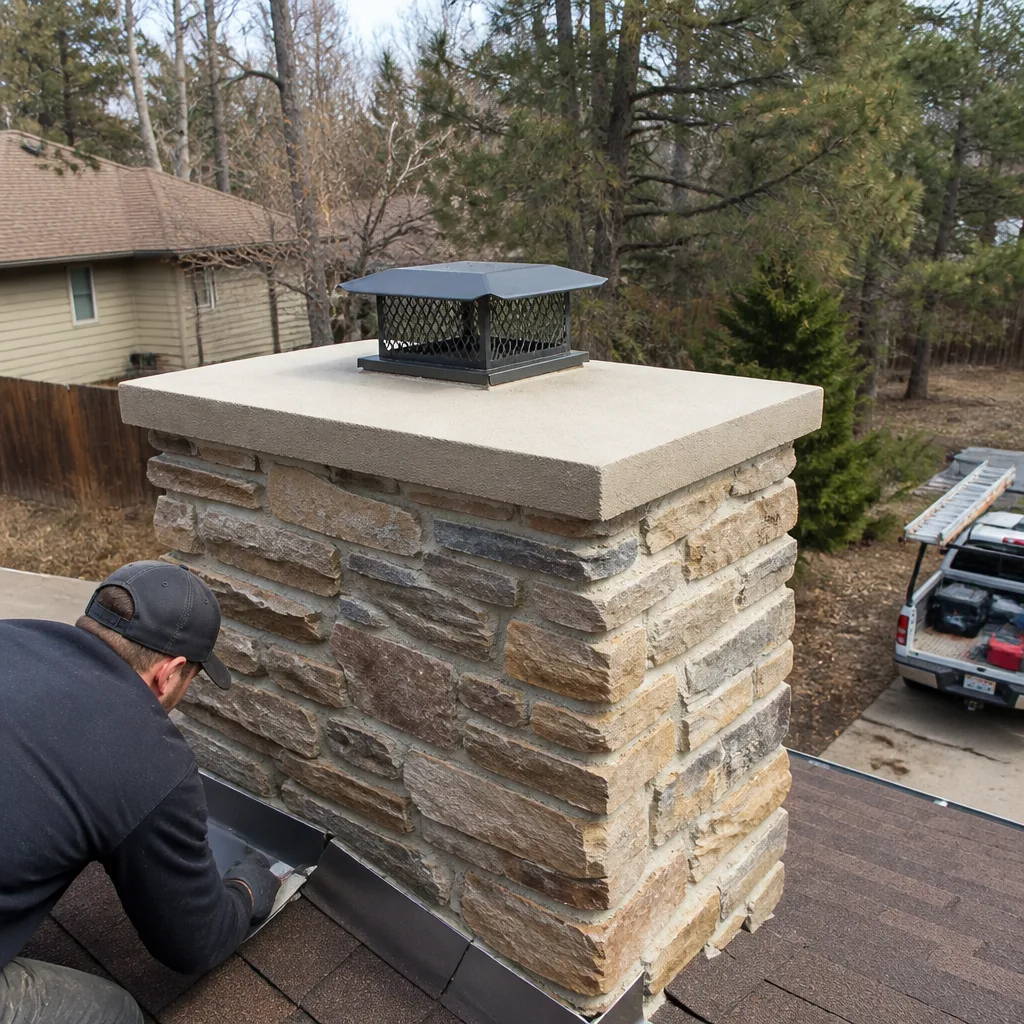 After
After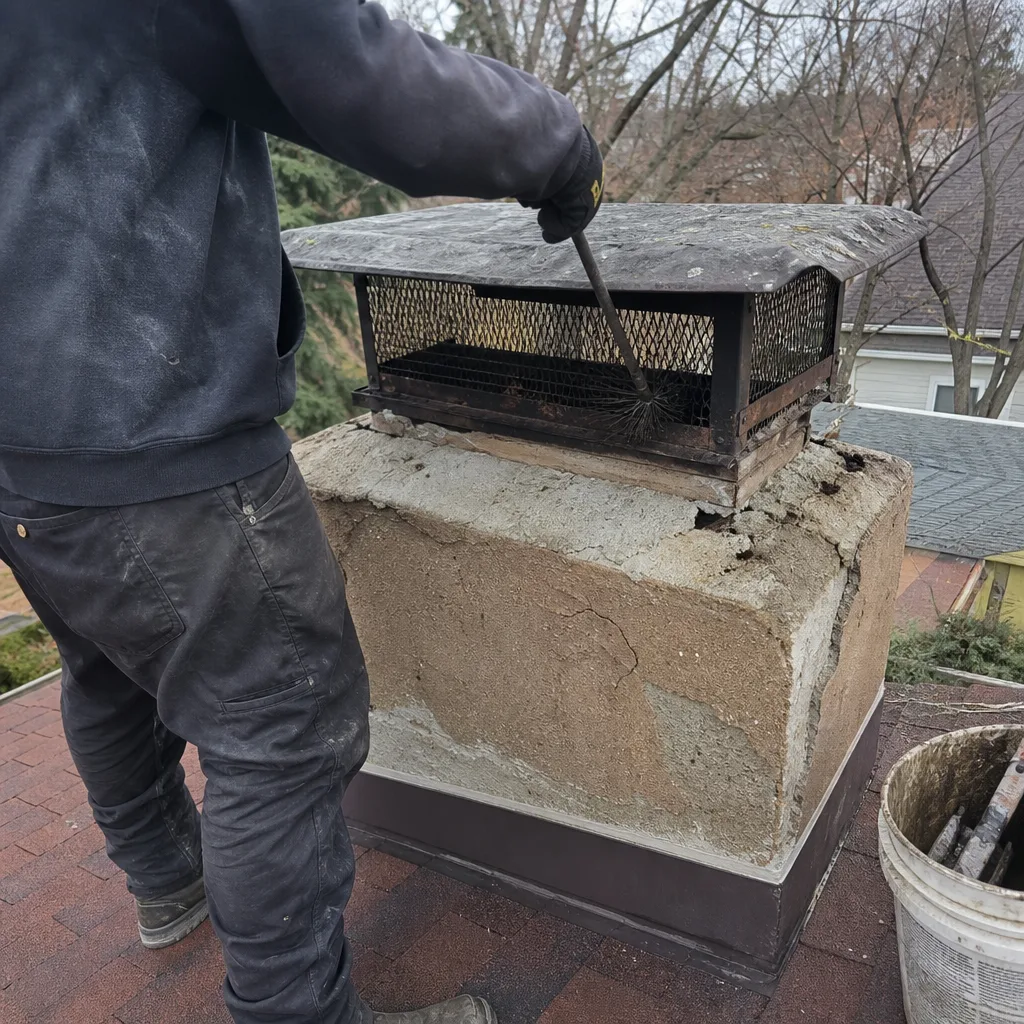 Before
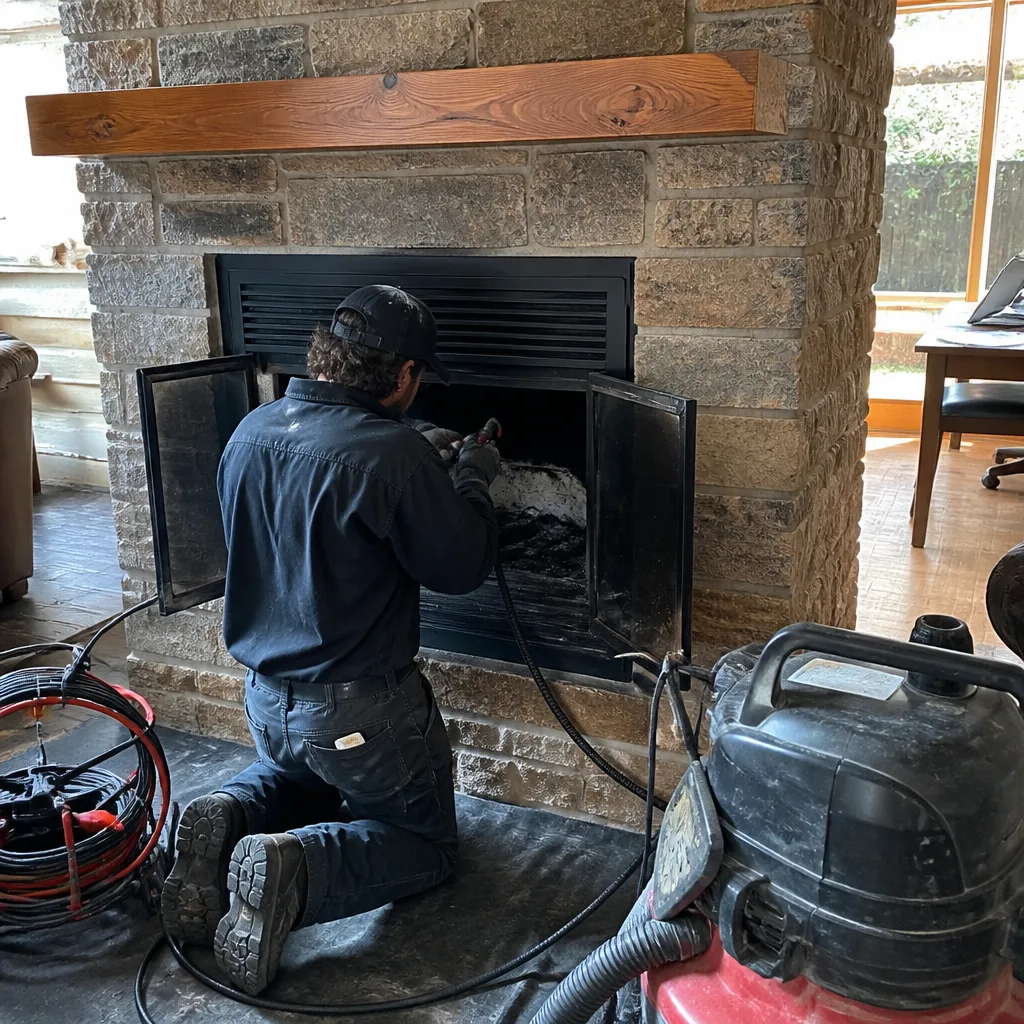 After
AfterCreosote Removal in Boulder, CO
Creosote removal in Boulder typically runs $150 to $800, depending on the class of buildup and how many flue sections need treatment – and most standard cleanings are completed in a single appointment. At Emberly Chimney Cleaners Boulder, every visit starts with a Level 1 Inspection including a camera scan down the flue so we can classify the creosote accurately before quoting a price, and you get that written price before any work begins.
Boulder’s climate makes this more than a routine box to check. The Front Range winters push homeowners to burn longer and harder than they might in milder climates, and the dry mountain air encourages fires that run hot fast and then cool off quickly – exactly the cycle that accelerates creosote deposits. We’ve seen it consistently across Mapleton Hill, Whittier, and the older neighborhoods east of Broadway: chimneys that look clean from the firebox but carry a heavy glaze layer up near the smoke chamber where a Fireplace Cleaning by flashlight never reaches.
If you have questions about what’s in your flue before booking, call us at (970) 598-0453 – a live person picks up, any hour. Or read on to understand exactly what we do, what it costs, and when it’s genuinely urgent. This page is a child of our Chimney Cleaning & Sweep in Boulder service – that page covers the full scope of what happens during a standard sweep appointment.
What Creosote Is and Why It Matters in Boulder
Creosote is a byproduct of incomplete combustion. When wood smoke rises up a flue and meets a cooler flue wall – or slows down because the draft is poor – the unburned hydrocarbons condense and stick. Over time, those deposits layer up and change character. The trade classifies creosote in three stages, and the stage determines both the risk and the removal method.
- Class I creosote is the dusty, flaky soot that a standard chimney brush removes in one pass. It’s normal and expected. A chimney that gets swept annually at the right interval never progresses past this point.
- Class II creosote is a harder, tar-like layer, often shiny or porous. It builds up when fires burn at low temperature for extended periods – think a log left smoldering overnight. Standard brushes don’t touch it; it takes specialized rotary tools or chemical treatments.
- Class III creosote is the one that changes the conversation entirely. It’s a thick, concentrated glaze that coats the flue liner and is extremely flammable. A single chimney fire can ignite it at temperatures above 2,000°F – hot enough to crack a terracotta liner or compromise a masonry flue in minutes. This is not a DIY removal situation. The tools required, and the confined-space conditions inside a chimney, create real injury risk; this is work for a trained technician with the right equipment.
In Boulder specifically, we regularly see Class II buildup in homes that use wood inserts for supplemental heat during the shoulder seasons – October and March especially – when fires tend to run cool and slow. The Chautauqua and Newlands neighborhoods have a high concentration of older masonry fireplaces that were built before modern flue-sizing standards, and undersized flues restrict draft, which speeds up creosote formation regardless of burning habits.
When You Need Creosote Removal
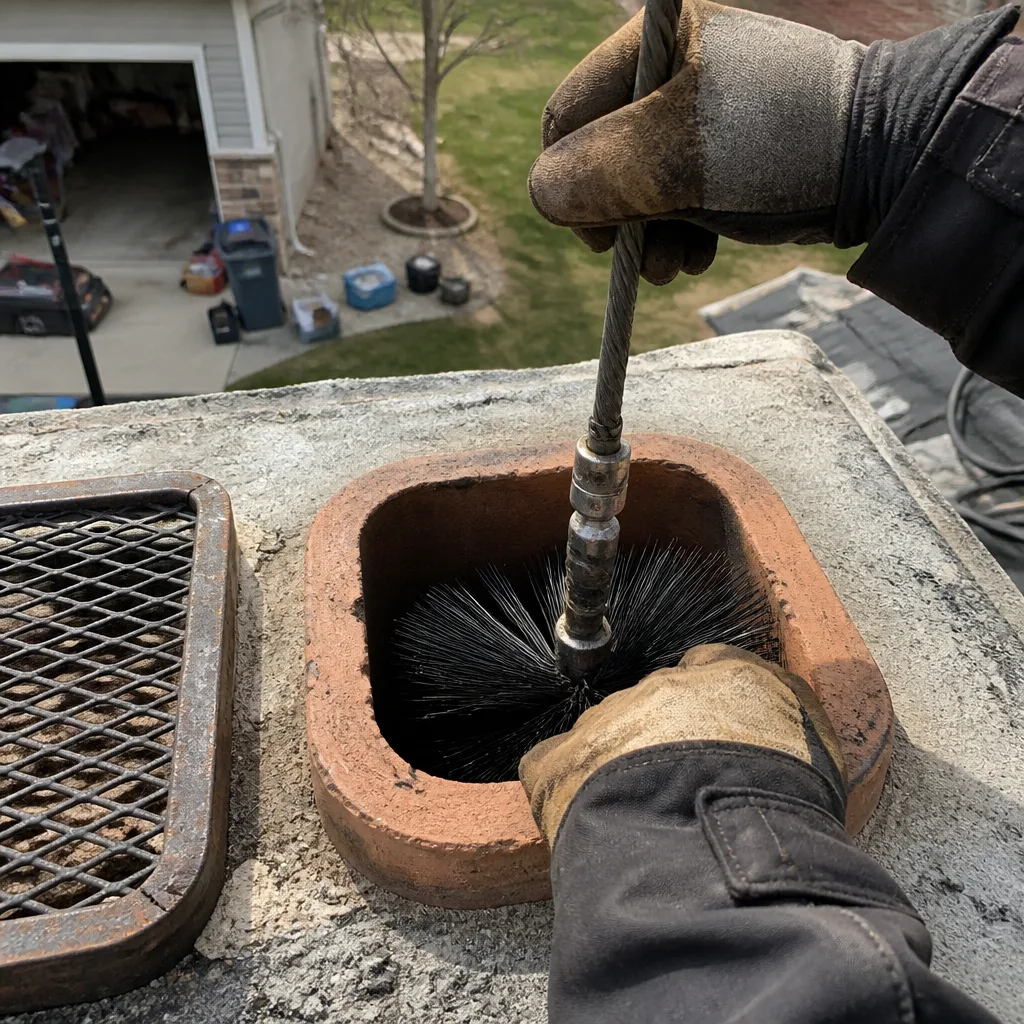
A standard annual Chimney Cleaning & Sweep services handles Class I buildup as a matter of course. Creosote removal – meaning dedicated treatment beyond a brush cleaning – becomes necessary when you recognize any of the following:
- A strong, acrid odor coming from the fireplace. In Boulder summers, when the stack effect reverses and air flows down instead of up, Class II and III deposits off-gas into the living space. If your fireplace smells like asphalt or a campfire even when it hasn’t been used recently, that’s creosote vapor.
- Black, oily residue around the damper or smoke chamber. Glaze-stage creosote often runs slightly when temperatures fluctuate, leaving visible staining above the firebox that homeowners sometimes mistake for water intrusion.
- Reduced draft or smoke backing into the room during fires. A thick creosote layer narrows the effective flue diameter and disrupts airflow. If you’re getting smoke in the room and the damper is fully open, the flue cross-section may be partially blocked.
- Your last inspection report noted Class II or Class III deposits. If you have a written inspection from another company and they flagged heavy creosote, bring it to us. Our free second opinion applies to any written estimate – we’ll camera-scan the flue and give you our own written assessment.
- You’ve had a chimney fire. Even a small chimney fire – sometimes experienced only as a rumbling sound and brief heavy smoke – can convert residual creosote to a brittle, popcorn-like Class III layer. The flue needs camera inspection and full removal before the fireplace is used again. This is a safety requirement, not a sales prompt.
- You bought the home in the last two to three years and have no sweep records. Boulder’s real estate market moves quickly, and chimney documentation rarely survives a sale. If you don’t have a written inspection report from someone who put a camera down the flue, you don’t actually know what’s up there.
BeforeAfterOur Creosote Removal Process
Every appointment follows the same sequence. There are no surprises after the technician is already in your home – the written price is in your hands before anything starts, as required by Clause 1 of the Haven Standard (H.A.V.E.N.: “Have it in writing”).
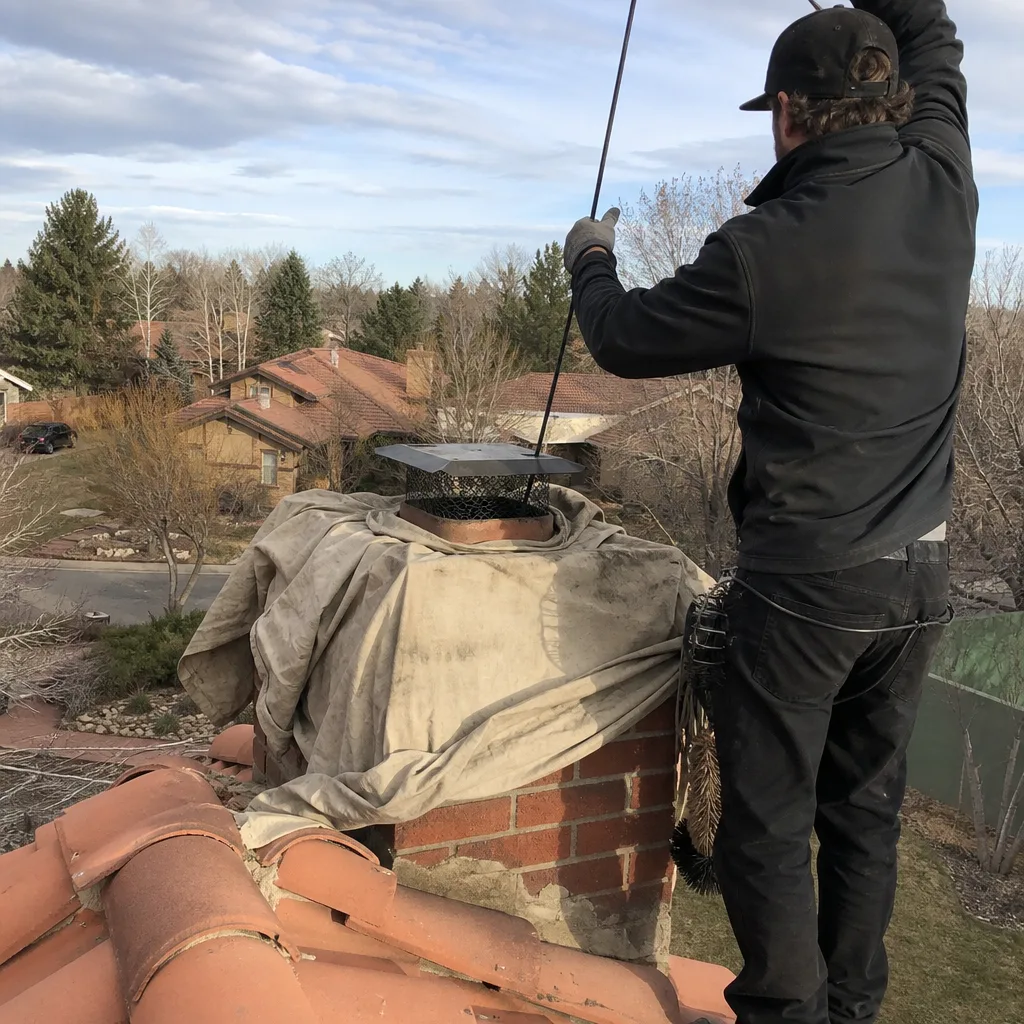
- Camera scan and creosote classification. We run a camera down the full length of the flue – from the firebox through the smoke chamber, up the liner, to the crown. The footage lets us classify the creosote accurately and identify any secondary issues: liner cracks, damaged mortar joints, or a compromised smoke chamber that might be contributing to the buildup. You see what we see.
- Written price and scope delivered before work begins. Once we know what class we’re dealing with, we give you a written quote with a specific dollar amount, a description of what we’ll do, and the warranty that covers the work. If the number doesn’t work for you, we part ways – no pressure, no invoice for the camera scan on a standard visit.
- Protective setup. We lay drop cloths across the hearth and surrounding floor, seal the firebox opening, and set up negative pressure where conditions call for it. Boulder’s older homes often have original hardwood floors right up to the hearth; we treat them accordingly.
- Mechanical removal or chemical treatment, depending on class. Class I and lighter Class II deposits are cleared with professional-grade rotary brushes and a high-efficiency vacuum system. Heavier Class II and Class III deposits require a chemical treatment – applied to the flue walls in one visit, allowed to penetrate the glaze layer, and then mechanically cleared on the follow-up. We use Copperfield-sourced chemical treatments that are specifically formulated not to damage terracotta or cast-iron liner sections, which are common in Boulder’s older stock.
- Post-removal camera confirmation. After mechanical clearance, the camera goes back down. We’re confirming the liner walls are clean and undamaged. If we find a liner crack or spalling that wasn’t visible pre-cleaning – sometimes heavy deposits mask structural damage beneath them – we document it and discuss next steps before leaving.
- Documented photo record delivered to you. Clause 4 of the Haven Standard requires a photo record on every job. You walk away with before-and-after documentation: what we found, what we did, and what the flue looks like now. That record is yours to keep for insurance purposes, future buyers, or your own reference.
Creosote Removal Pricing in Boulder
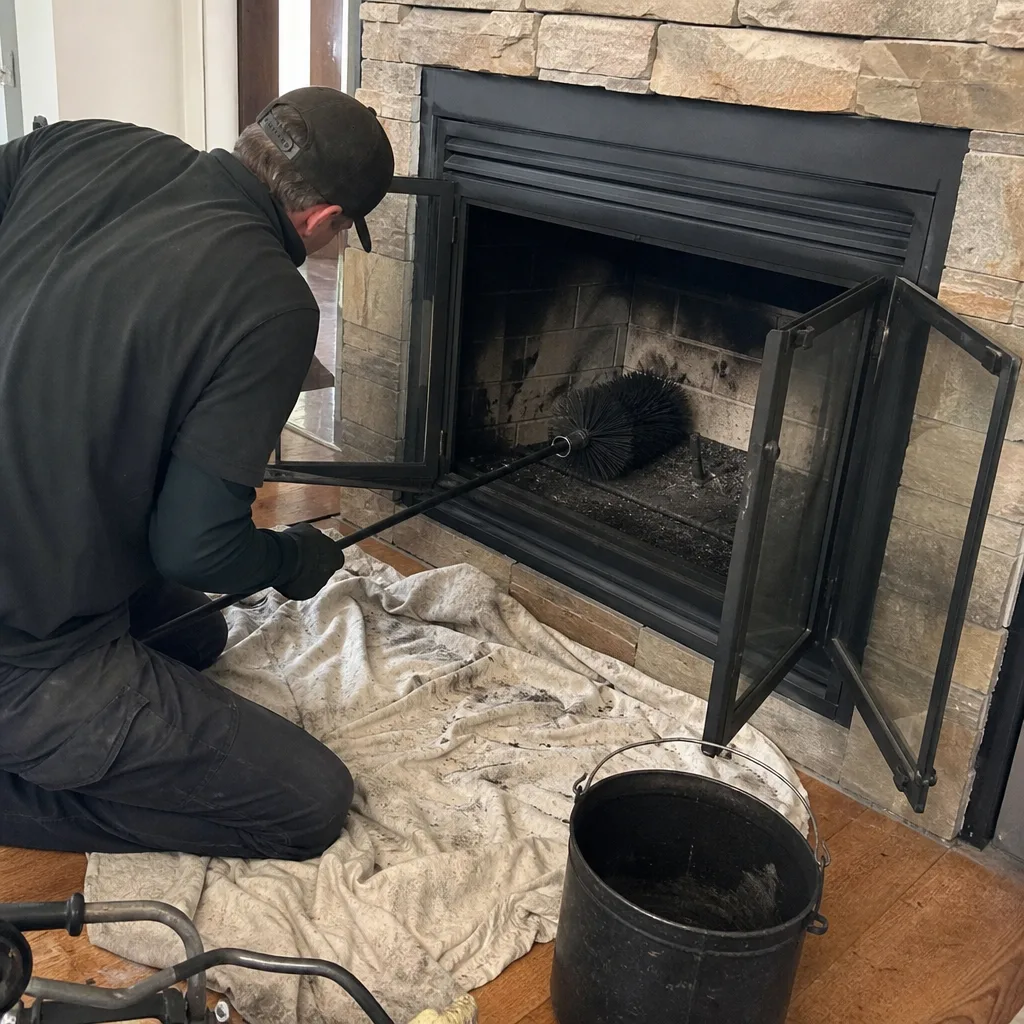
Creosote removal in Boulder costs $150 to $800 for most residential chimneys. The range is wide because the class of creosote and the length of the flue both matter significantly. Here’s how the numbers break down:
| Creosote Class | Typical Price Range | What’s Involved |
|---|---|---|
| Class I (standard sweep) | $150 – $250 | Rotary brush cleaning, vacuum, camera scan included |
| Class II (heavy deposit) | $250 – $450 | Rotary tools plus possible chemical application; may require follow-up |
| Class III (glaze stage) | $450 – $800+ | Chemical treatment first visit, mechanical clearance second visit; full liner inspection required |
| Multi-flue homes | Add $100 – $200 per additional flue | Common in Boulder’s larger older properties with separate fireplace and furnace flues |
A few things that push the number higher in Boulder specifically: flue height matters, and many of Boulder’s two-story homes have longer runs than a typical ranch-style property. Homes in the foothills at the edge of the city occasionally have non-standard flue configurations that take additional time to work through. And if the camera scan reveals a cracked liner beneath the creosote, that’s a separate repair conversation – we’ll quote it in writing on the same visit so you have one clear document, not a series of surprises.
The estimate is always free, and the written price is always before work starts – not a verbal estimate that changes once someone is on your roof. If you’ve already received a written quote from another company, bring it. We’ll camera-scan the flue and give you our own written assessment at no charge.
Key Takeaways
- Creosote removal in Boulder runs $150 to $800 for most homes, with Class III glaze treatment at the higher end.
- Class III creosote is a fire hazard and requires chemical treatment – not just brushing. It’s not a DIY job.
- Boulder’s climate and burning habits accelerate creosote formation; annual sweeps prevent escalation to more expensive classes.
- Every Emberly Chimney Cleaners Boulder visit includes a camera scan, a written price before work starts, and a documented photo record when it’s done.
- The 365-Day Done Right Promise covers every job: if it’s not right, we make it right.
FAQs – Creosote Removal in Boulder
How much does creosote removal cost in Boulder, CO?
Creosote removal in Boulder costs between $150 and $800 for a standard residential chimney, depending on whether the deposit is Class I (dusty, brushes out easily), Class II (hard glaze requiring rotary tools), or Class III (thick glaze requiring chemical treatment over two visits). The camera scan that lets us classify the deposit accurately is included in the appointment. You get the written price before any work begins – that’s not optional at Emberly Chimney Cleaners Boulder, it’s how every job runs. Call (970) 598-0453 to schedule; the estimate is free.
Is creosote removal dangerous to do yourself?
Class I creosote – the light, dusty kind – can be disturbed with a brush, but working inside a chimney flue involves tight spaces, caustic soot, and, for Class II and III deposits, chemical treatments that require proper protective equipment and ventilation. Class III glaze in particular is extremely flammable, and disturbing it without containing the debris creates a genuine fire and inhalation risk. The professional tools for rotary cleaning inside a liner are also not available at hardware stores. Our strong recommendation: have a trained technician handle anything beyond a basic firebox cleaning, and have any creosote classified by camera before deciding on a removal method.
How often does creosote need to be removed in Boulder?
An annual sweep – timed to the end of heating season or the start, your preference – keeps most Boulder fireplaces at Class I and prevents buildup from advancing. If you burn more than two to three cords of wood a year, or if you use a wood insert for extended low-temperature burns during shoulder seasons, a mid-season check is worth scheduling. Homes in Boulder that went multiple years without a sweep often present Class II or early Class III by the time we see them; at that point, removal costs more and takes longer. Annual maintenance is the cost-control strategy.
What happens if creosote removal reveals a damaged liner?
It happens more often than homeowners expect, because heavy creosote deposits sometimes mask cracks or spalling in the flue liner beneath them. When our post-removal Level 2 Inspection camera scan finds liner damage, we document it in the photo record and walk you through what we found in plain terms – what the damage looks like, what it means for safe operation, and what repair options exist. We quote the repair in writing before any additional work begins. If you want a second opinion on that repair quote from another company, that’s fine – the 365-Day Done Right Promise applies to what we did, and you’re never pressured into additional work on the same visit. DuraFlex and HeatShield liner systems are available through our materials network if a full or partial relining is warranted.
Schedule Your Creosote Inspection in Boulder
If you’re not sure what class of creosote is in your flue – or if you’ve got a written quote from another company and want a second set of eyes – call Emberly Chimney Cleaners Boulder at (970) 598-0453. Someone picks up, any hour. We’ll schedule a camera scan, classify what’s there, and give you a written price before a single tool comes out. That’s how it works on every job, for every customer, in every Boulder neighborhood we serve.
If you’re starting from scratch and want to understand the full scope of what a sweep appointment covers, our home page lays out the complete service picture and what the Haven Standard means in practice.
Corrine Halstead and the Emberly team have documented more than 38,000 chimney inspections and cleanings since 2009. Every one came with a written price before work started and a photo record when it was done. Yours will too.
Written by Corrine Halstead, Owner at Emberly Chimney Cleaners Boulder, serving Boulder.